Jeyms Chadvik
 Great Britain
- Biography of James Chadwick
- Early Career and Research
- Internment and Return to England
- Discovery of the Neutron
- Experimental Confirmation and Later Work
- Later Life and Achievements
Biography of James Chadwick
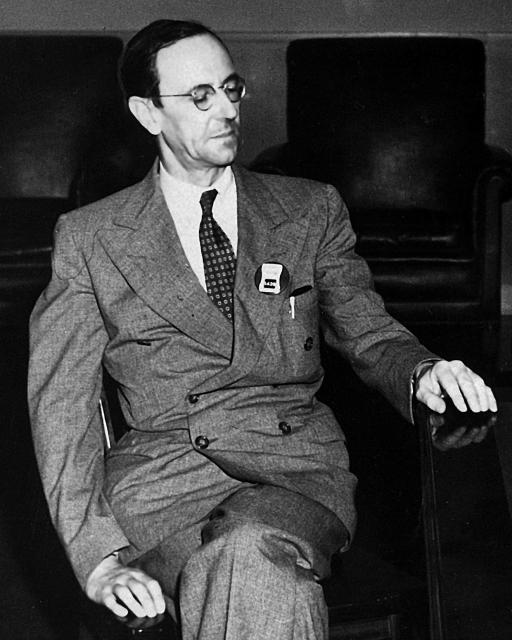
Early Life and EducationJames Chadwick, an English physicist, was born in Bollington, near Manchester. He was the eldest of four children of John Joseph Chadwick, the owner of a laundry, and Ann Mary (Knowles) Chadwick. After completing his primary education at a local school, he attended Manchester Municipal High School, where he excelled in mathematics. In 1908, Chadwick enrolled at the University of Manchester with the intention of studying mathematics. However, due to a misunderstanding, he was interviewed for physics and, too modest to point out the mistake, he carefully answered the questions and decided to change his specialization. He graduated from the university with honors in physics in 1911.
Early Career and Research
In 1911, Chadwick began his graduate work under the guidance of Ernest Rutherford at the physical laboratory in Manchester. It was during this time that Rutherford's experiments on the scattering of alpha particles (which were considered to be charged helium atoms) through thin metal foils led to the hypothesis that the mass of an atom was concentrated in a dense positively charged nucleus, surrounded by negatively charged electrons, which were known to have relatively small mass. Chadwick obtained his master's degree from Manchester in 1913, and in the same year, he received a scholarship to study radioactivity under Hans Geiger (a former assistant of Rutherford) at the State Physical-Technical Institute in Berlin, Germany.
Internment and Return to England
When World War I began in 1914, Chadwick, as a British citizen, was interned and spent over four years in a civilian internment camp in Ruhleben. Despite the harsh conditions, Chadwick actively participated in a scientific society formed by his fellow internees. This group received support from some German scientists, including Walter Nernst, whom Chadwick had met while interned. Chadwick returned to Manchester in 1919.
Discovery of the Neutron
Shortly before his return, Rutherford discovered that bombarding alpha particles (which were now considered to be helium nuclei) could cause the disintegration of nitrogen atoms into lighter nuclei of other elements. A few months later, Rutherford was appointed director of the Cavendish Laboratory at the University of Cambridge and invited Chadwick to join him. Chadwick received a Walston scholarship at Gonville and Caius College, Cambridge, and continued his experiments with alpha particles. They discovered that when bombarding nuclei, they often produced what appeared to be hydrogen nuclei, the lightest of all elements. The hydrogen nucleus carried a positive charge equal in magnitude to the negative charge of the corresponding electron but had a mass approximately 2,000 times greater than that of the electron. Rutherford later named it the proton. It became clear that the atom as a whole was electrically neutral because the number of protons in the nucleus equaled the number of electrons surrounding the nucleus. However, this number of protons did not match the mass of atoms, except in the case of hydrogen. To reconcile this discrepancy, Rutherford proposed in 1920 the idea that nuclei could contain electrically neutral particles, which he later called neutrons, formed by the combination of an electron and a proton.
Experimental Confirmation and Later Work
Chadwick conducted experiments and calculations to support Rutherford's hypothesis. He analyzed the energy exchange between neutrons and protons knocked out of matter, likening it to the collision of billiard balls. The energy exchange was particularly efficient due to the nearly equal masses of the two particles. He also analyzed the tracks of nitrogen atoms that had collided with neutrons in a cloud chamber. As the neutron itself does not directly cause ionization, its track was not visible. Chadwick had to deduce the properties of the neutron from the track left after its collision with a nitrogen atom. It was found that the mass of the neutron exceeded that of the proton by 1.1%. Chadwick's experiments and calculations were later confirmed by other physicists, and the existence of the neutron was quickly recognized.
Later Life and Achievements
Chadwick moved to the University of Liverpool in 1935 to establish a new center for nuclear physics research. He oversaw the modernization of the university's equipment and led the construction of a cyclotron, a device for accelerating charged particles. During World War II, Chadwick was involved in research on atomic weapons and coordinated the efforts of British scientists working on the Manhattan Project in the development of nuclear weapons. After the war, Chadwick returned to the University of Liverpool and later became the Master of Gonville and Caius College in 1948. He retired from active scientific work in 1950 and moved to North Wales with his wife Eileen. They returned to Cambridge in 1969 to be closer to their twin daughters. Chadwick passed away in Cambridge in 1974.
In addition to the Nobel Prize in Physics for the discovery of the neutron in 1935, Chadwick received numerous other awards and honors throughout his career, including the Hughes Medal and Coplley Medal from the Royal Society, the Medal of Merit from the U.S. Government, the Franklin Medal from the Franklin Institute, and the Guthrie Medal from the Physical Society of London. He was knighted in 1945 and held honorary degrees from nine British universities. He was also a member of various scientific societies and academies in Europe and the United States.