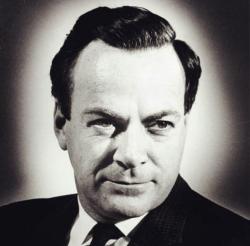
Louis Slotin
 Canada
- Biography of Louis Zlotin
- Early Life and Education
- Career
- Involvement in the Manhattan Project
- Fatal Incident and Death
Biography of Louis Zlotin
Louis Alexander Zlotin was a Canadian chemist and physicist who was involved in the Manhattan Project for the development of nuclear weapons. His participation in the project resulted in fatal radiation exposure and excruciating suffering before his death.
Early Life and Education
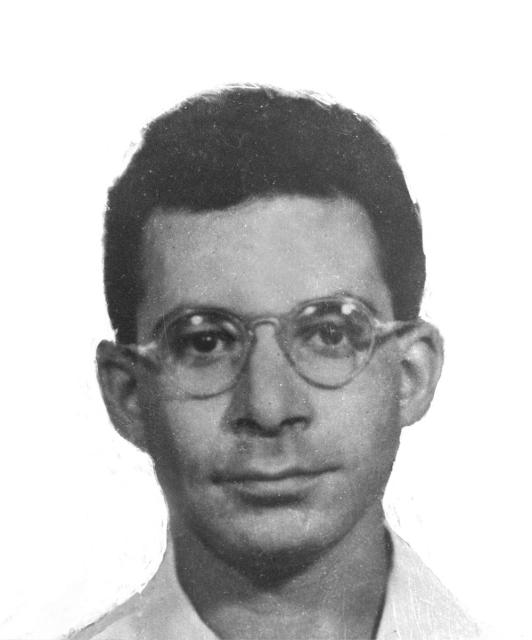
Born on December 1, 1910, in Winnipeg, Manitoba, Canada, Louis Alexander Zlotin was the oldest of three children. His parents fled from Russia during a Jewish pogrom. His younger brother, Sam, noted that Louis had a deep concentration that allowed him to engage in research for hours on end. At the age of 16, Zlotin enrolled at the University of Manitoba to pursue a scientific degree. He excelled in his studies and received a gold medal for his achievements in physics and chemistry. With a degree in geology, Zlotin went on to pursue further education at King's College London in 1933, where he learned from Arthur John Allmand, a specialist in applied electrochemistry and photochemistry. While at college, Zlotin also showcased his athletic abilities by winning the amateur boxing championship in the lightweight division. In 1936, he successfully defended his dissertation on physical chemistry.
Career
After completing his studies, Zlotin worked as a special tester for the Drumm nickel-zinc batteries used on the Dublin-Bray line of the Dublin railway. In 1937, following an unsuccessful attempt to join the National Research Council of Canada, Zlotin found employment at the University of Chicago. It was during his time as a scientific associate at the university that Zlotin first encountered nuclear chemistry when he helped build the first cyclotron in the Midwest of the United States. The position was not financially rewarding, and Zlotin relied on financial assistance from his father for two years. In 1939-1940, Zlotin and Earl Evans, the head of the biochemistry department at the University of Chicago, used the cyclotron to obtain radio-carbon (carbon-14 and carbon-11). They also demonstrated that plant cells have the ability to use carbon dioxide for carbohydrate biosynthesis.
Involvement in the Manhattan Project
Zlotin's expertise in nuclear weapons assembly caught the attention of the United States government, which invited him to participate in the Manhattan Project. Within the project, Zlotin worked on plutonium production under the guidance of future Nobel laureate Eugene Wigner. In December 1944, Zlotin moved to the Los Alamos Laboratory in New Mexico, where he collaborated with Robert Bacher's team.
At the laboratory, Zlotin conducted dangerous experiments, first determining the critical mass of uranium with Otto Robert Frisch, and then studying the fission of plutonium nuclei. Scientists referred to such experiments with the potential for a nuclear chain reaction as "tickling the tail of the dragon," alluding to a remark made by physicist Richard Feynman, who compared such experiments to "tickling the tail of a sleeping dragon." On July 16, 1945, Zlotin assembled the core for the first detonated atomic device, codenamed "Trinity." Due to his expertise in nuclear weapons assembly, Zlotin became known as the "chief armorer of the United States."
Fatal Incident and Death
On August 21, 1945, Zlotin was involved in an experiment to initiate the first steps of a chain reaction. While adjusting the gap between two beryllium-coated plutonium hemispheres with a screwdriver, the tool slipped, causing Zlotin to drop the 9-inch upper hemisphere with his left hand. As a result, Zlotin received a fatal dose of radiation.
Witnesses observed a blue glow of ionized air and felt a wave of heat when the hemispheres were joined. Zlotin experienced a sour taste in his mouth and intense burning in his left hand. Upon leaving the room, he began to feel nauseous. Zlotin was taken to the hospital where a mass of volunteers agreed to donate blood for a possible transfusion. However, it soon became clear that his death was inevitable.
Lieutenant General Leslie R. Groves of the United States Army informed Zlotin's parents of their son's tragic condition. Over the next nine days, Zlotin suffered from severe diarrhea, decreased urination, erythema, massive blisters on his hands and forearms, intestinal obstruction, and gangrene. Ultimately, his entire body shut down.
Louis Zlotin died on May 30, 1946, surrounded by his parents. His colleague Alvin Graves, who was closest to Zlotin at the time of the incident, developed acute radiation sickness and spent several weeks in the hospital. Graves suffered from chronic neurological disorders and vision problems. He lived to be 54 years old, and his cause of death was a heart attack.
Another colleague, Marion Edward Chishlitzki, died 19 years after Zlotin from acute myeloid leukemia at the age of 42. There is also information about another colleague of Zlotin, Dwight Young, who participated in the fateful experiment. Young died at the age of 83 from aplastic anemia and a bacterial heart infection.