Jia Jia
 China
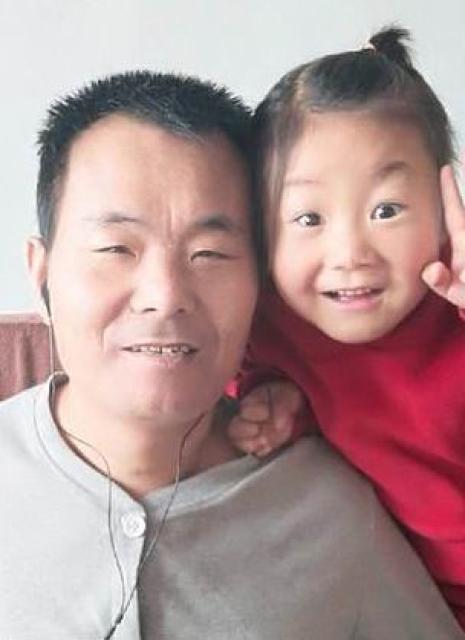
Jia Jia became widely known in 2018 through videos of her daily life with her father, who was paralyzed from the chest down after a car accident. She was only six, yet helped him with parts of his morning routine before going to school. Her story drew attention to a child’s devotion to her family—and to the difficult care needs facing a household after a life-changing injury.
A childhood reshaped by an accident
Jia Jia lived with her father, Tian Haicheng, in Ningxia Hui Autonomous Region in northwestern China. In March 2016, when she was about three, her father was injured in a traffic accident that left him paralyzed from the chest down. The accident brought major medical and financial challenges for the family.
By 2018, reports described Jia Jia as helping her father each morning before school. She assisted him from bed into his wheelchair, helped him wash, and sometimes helped him shave or eat. Her father’s parents also played an important caregiving role: they supported the household and looked after him while Jia Jia was at school. The family’s routine was shared, even as the young girl took on tasks that would be unusual for a child her age.
Learning how to help
The reports portrayed Jia Jia as observant and resourceful. She learned by watching her grandmother care for her father and began helping on her own. Her father recalled one practical idea she suggested: attaching a spoon to his hand so he could feed himself more easily. Such small adaptations reflected the family’s effort to preserve his independence while adjusting to his disability.
Her mornings started early. News accounts said she helped get her father settled in his wheelchair and assisted with washing and dressing before heading to class. After school, she returned to a home where care and rehabilitation remained part of everyday life. The family’s older relatives helped fill the gaps, underscoring that Jia Jia’s contribution existed within a wider network of support.
A story seen by millions
Jia Jia’s father shared videos of their routine on Kuaishou, a Chinese short-video and livestreaming platform. The clips attracted a large audience, and reports said viewers sent practical support, including clothing and school supplies for the child. The online attention helped bring the family’s circumstances into public view and, according to contemporary accounts, provided financial assistance for her father’s care.
The videos made her an unexpected public figure, but the story was fundamentally a family’s private experience made visible online. Jia Jia was a young schoolchild, not a professional caregiver, and contemporary reporting captured only a short period of her life. The coverage focused on her father’s recovery, her help at home, and the support they received; reliable public accounts of her later life are limited.
At six, she was balancing school with a remarkable level of responsibility. Her story resonated because it showed both a child’s care for a parent and the practical strain placed on families after severe injury. It is best remembered with that full picture in view: her tenderness and initiative, the grandparents’ vital help, and the need for support that no child should have to shoulder alone.