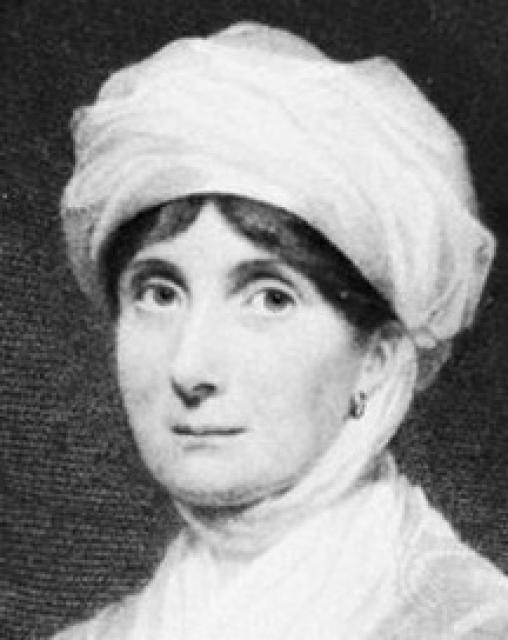
Joanna Baillie
 Great Britain
- Joanna Baillie: A Romantic Poet and Playwright
- Literary Beginnings in London
- The "Scottish Shakespeare"
- A Literary Legacy
- Recognition and Revival
- Posthumous Impact
Joanna Baillie: A Romantic Poet and Playwright
Early Life and EducationJoanna Baillie was born into a devout Presbyterian family in Scotland. Her father was a theology professor at the University of Glasgow, while her mother came from a lineage of physicians. Showing early promise in the arts and academia, young Joanna excelled in drawing, music, mathematics, and most notably, literature and drama.
Literary Beginnings in London
After her father's untimely death, Baillie relocated to London with her mother and sister in 1784. Through her aunt's literary salon, she gained entry into the city's intellectual circles, meeting renowned figures such as Fanny Burney and Elizabeth Carter. Inspired by their influence, she embarked on a writing career, penning both poetry and plays.
The "Scottish Shakespeare"
In 1802, Baillie settled in Hampstead. After her mother's passing, she and her sister fostered a vibrant literary and scientific community. Among their close associates was the esteemed author Walter Scott, who admired Baillie's work immensely. He dubbed her the "Scottish Shakespeare" and frequently quoted her plays in the prologues of his novels.
A Literary Legacy
Baillie's works gained widespread recognition for their lyrical verse, compelling characters, and romantic themes. Her most famous play, "De Montfort," was published with a preface by Scott in 1810. Beethoven set ten of her poems to music. Additionally, her plays were performed by renowned actors such as Sarah Siddons, Edmund Kean, and John Philip Kemble.
Recognition and Revival
Despite dwindling popularity in later years, interest in Baillie's theatre, characterized by its Gothic elements, has seen a resurgence in recent times. Her unique blend of romanticism and dramatic intensity continues to captivate audiences and scholars alike.
Posthumous Impact
Just weeks before her death in 1851, a comprehensive collection of all her writings was published, ensuring her literary legacy. Joanna Baillie remains an influential figure in British literature, her works serving as a testament to her remarkable talent and enduring impact on the art of poetry and drama.