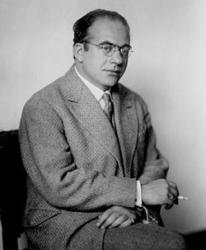
Johan Widekindi
 Sweden
- Johan Widekind: Notable Swedish Historian and Royal Historiographer
- Early Career and Interest in History
- Appointment as Royal Historiographer
- "The Swedish-Muscovite War of the 17th Century"
- Political Turmoil and Imprisonment
- "Biography of Gustav II Adolf"
- Legacy and the Lost Manuscript
Johan Widekind: Notable Swedish Historian and Royal Historiographer
Born in the countryside of Västmanland, Johan Widekind embarked on his academic journey in 1640 at Uppsala University. Renowned for his eloquence in Latin, he earned his Master's degree from Oxford University in 1653.
Early Career and Interest in History
Upon his return to Sweden, Widekind initially served as a rhetoric professor in Stockholm. As a librarian and archivist for Axel Oxenstierna, he delved into the extensive collection of 16th and 17th-century documents. Inspired by these materials, he conceived the idea of writing a historical work on Poland-Sweden relations.
Appointment as Royal Historiographer
In 1665, with the support of Chancellor Magnus De la Gardie, Widekind became the royal historiographer. He compiled genealogical tables and began writing a comprehensive account of De la Gardie's illustrious career. King Charles XI commissioned him to document Swedish history from the reign of Gustav Vasa to the present day.
"The Swedish-Muscovite War of the 17th Century"
Widekind's most significant work, "The Swedish-Muscovite War of the 17th Century," was published in both Swedish and Latin in 1671 and 1672 respectively. It chronicled the events leading to Sweden's involvement in the Russian Time of Troubles, including the campaign of Jacob De la Gardie, the military intervention of 1610-1617, the subsequent peace negotiations, and the implementation of the Stolbovo peace treaty.
Political Turmoil and Imprisonment
In 1675, Widekind fell victim to the rivalry between the De la Gardie and Gyllenstierna factions in parliament. Accused of anti-government ties, he was imprisoned for two months. The harsh conditions of his incarceration severely impacted his health.
"Biography of Gustav II Adolf"
The first volume of Widekind's second major work, "Biography of Gustav II Adolf," was posthumously published in 1691. However, due to its unflattering portrayal of Denmark and Russia, the majority of the print run was confiscated, with only 87 copies sold. Swedish authorities criticized Widekind's narrative and the inclusion of sensitive documents.
Legacy and the Lost Manuscript
Despite its controversial reception, Widekind's historical writings provided valuable insights into the Swedish-Russian relationship and the reign of Gustav II Adolf. While the manuscript for the second volume of his Gustav Adolf biography has been lost, some speculate that it was smuggled out of the country by another royal historiographer, Samuel Pufendorf. Johan Widekind's contributions to Swedish historiography continue to be remembered to this day.