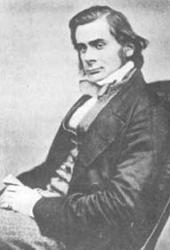
Johann Julius Walbaum
 Germany
- Johann Julius Walbaum
- Zoological Contributions
- Society for the Promotion of Public Works
- Natural History Museum in Lübeck
- Legacy
Johann Julius Walbaum
Early Life and CareerJohann Julius Walbaum was born in 1724 in Wolfenbüttel, Germany. He studied medicine at the University of Göttingen and went on to become a practicing physician in Lübeck. However, his true passion lay in natural history.
Zoological Contributions
As a zoologist, Walbaum dedicated himself to the study and classification of animals. He embarked on expeditions to various regions, including the tropics, where he collected and described numerous previously unknown species. Among his notable discoveries are several species of Pacific salmon, including the chum salmon (Oncorhynchus keta), the pink salmon (Oncorhynchus gorbuscha), the sockeye salmon (Oncorhynchus nerka), the chinook salmon (Oncorhynchus tshawytscha), and the rainbow trout (Oncorhynchus mykiss). He also described a species of characiform fish, Prochilodus marggravii, from the São Francisco River in Brazil.
Society for the Promotion of Public Works
In Lübeck, Walbaum played an influential role in the establishment of the Society for the Promotion of Public Works (Gesellschaft zur Beförderung gemeinnütziger Tätigkeit). This organization, which still exists today, is dedicated to promoting community development through education, science, and the arts.
Natural History Museum in Lübeck
Walbaum's extensive scientific collections formed the basis for the Museum of Natural History in Lübeck (Museum für Natur und Umwelt Lübeck), which opened in 1893. The museum housed a wide range of specimens, including those collected by Walbaum himself. Unfortunately, these collections were destroyed during World War II.
Legacy
Johann Julius Walbaum left a significant mark on the field of zoology. His descriptions of new species and his contributions to the classification of fishes continue to be valuable resources for researchers today. His work also played a vital role in the development of scientific institutions in Lübeck.