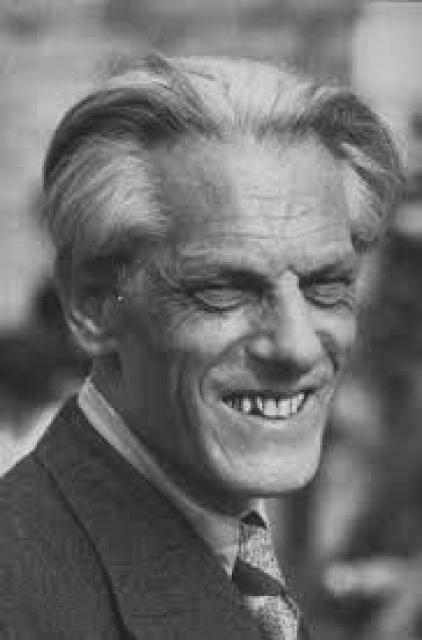
Johann Koplenig
 Austria
- Early Life
- Political Activism
- World War I and Russian Captivity
- Leadership in the Austrian Communist Party
- Opposition to Fascism
- Exile and the Kampf gegen den Faschismus
- Call for an Independent Austria
- Return to Austria
- Legacy and Personal Life
Early Life
Johann Koplenig was born in a humble family of farm laborers in Austria. Financial constraints forced him to discontinue his education after only two years of primary school and pursue an apprenticeship as a shoemaker.
Political Activism
During a training trip in 1909-1910, Koplenig encountered socialist ideas and joined the Social Democratic Party of Austria. He played an active role in the labor movement, representing workers in the shoe and leather industry.
World War I and Russian Captivity
In 1914, Koplenig was drafted into the army and deployed to the Eastern Front. He was wounded and captured by the Russians in 1915. During his captivity, he embraced Bolshevism and became a leader among prisoners of war in Nizhny Novgorod.
Leadership in the Austrian Communist Party
Returning to Austria in 1920, Koplenig immersed himself in political work in Knittelfeld, participating in elections and establishing a local Communist Party (KPA) chapter. By 1922, he was elected Co-Chairman of the KPA and a representative of Styria in its leadership.
Opposition to Fascism
As the Communist Party grew, Koplenig played a crucial role in organizing resistance against the rise of National Socialism. Following the July 1927 uprising, he was arrested but ultimately acquitted of charges of incitement and treason.
Exile and the Kampf gegen den Faschismus
With the suppression of the Communist Party in 1933, Koplenig sought refuge in Prague, from where he coordinated the party's underground activities. Following the February 1934 suppression of the Social Democratic Party, the KPA became an influential force in the anti-fascist movement.
Call for an Independent Austria
After the Seventh Congress of the Communist International in 1935, Koplenig championed the concept of an independent Austrian nation, which attracted a broad coalition of political parties advocating for Austria's sovereignty.
Return to Austria
With the liberation of Vienna in 1945, Koplenig returned home and played a pivotal role in establishing the Second Austrian Republic. He was one of four signatories of the Declaration of Independence on April 27, 1945, and served in the interim government of Karl Renner.
Legacy and Personal Life
Koplenig retired as Chairman of the KPA in 1965 and was bestowed the title of Honorary Chairman. He passed away in 1968 and is buried in the cemetery at the Simmering Crematorium in Vienna. His daughter, Elisabeth, was a noted Slavic scholar and translator of Alexander Solzhenitsyn.


