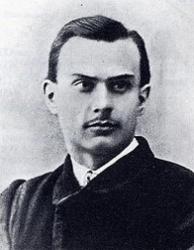
Johannes Warming
 Denmark
- Early Life and Education
- Academic Career
- Expeditions and Research
- Contributions to Botany and Ecology
- Honors and Legacy
Early Life and Education
In 1859, Eugen Warming embarked on his studies in natural history at the University of Copenhagen. However, his academic journey took a three-and-a-half-year hiatus (1863-1866) while he served as an assistant to Danish paleontologist and zoologist Peter Wilhelm Lund in the tropical forests of Lagoa Santa, Brazil.
Upon his return to Europe, Warming studied botany for a year at the University of Munich under Karl Wilhelm von Naegeli, Carl Friedrich Philipp von Martius, and Ludwig Radlkofer. He then pursued microbiology at the University of Bonn under Ludwig von Hanfstaengel, completing his doctoral dissertation in 1871 at the University of Copenhagen.
Academic Career
Despite being the leading candidate for the vacant professorship in botany at the University of Copenhagen following the death of Anders Sandøe Ørsted, Warming was passed over in favor of Ferdinand Didrichsen. Instead, Warming became a docent in botany at Copenhagen University as well as at the Polytechnic and Pharmaceutical College (1873-1882). From 1882 to 1886, he held the position of professor of botany at the Stockholm College of Higher Education (later renamed Stockholm University).
During this period, Warming participated in expeditions to study Norwegian provinces: Western Greenland (1884), Finnmark (1885), and Oppland (1887). In 1885, he finally secured the professorship in botany at the University of Copenhagen and became the director of the Copenhagen Botanical Garden, a post he held until 1911.
Expeditions and Research
Warming's expeditions extended beyond Europe, including travels to Venezuela, Trinidad, and the Virgin Islands (then Danish West Indies) in 1891-1892. In 1895, he visited the Faroe Islands. His research focused on the distribution of plants in relation to environmental conditions, leading him to develop the concept of "life forms" and establish the foundation of ecological morphology.
Contributions to Botany and Ecology
Warming is considered one of the founders of ecology, publishing the first textbook on plant ecology ("Ecological Plant Geography," 1896) and delivering the first university course on the subject. He also coined the term "epharmony" in botany, referring to the adaptations of plant structures to their environments. Warming's work had a significant influence on the development of botany and ecology worldwide, including in Russia, where his textbooks were widely translated and disseminated.
Honors and Legacy
Eugen Warming received numerous accolades for his contributions, including membership in the Danish Royal Academy of Sciences from 1878 until his death. He served as president of the International Association of Botanists (1913) and was an honorary member of the Royal Society of London, the Danish Botanical Society, and the Brazilian Imperial Order of the Rose.
The genus Warminiga (Orchidaceae) and the "Warming Symposia on Evolutionary Ecology" held at the University of Minas Gerais in Brazil since 1994 bear his name, honoring his lasting legacy in the field of science.