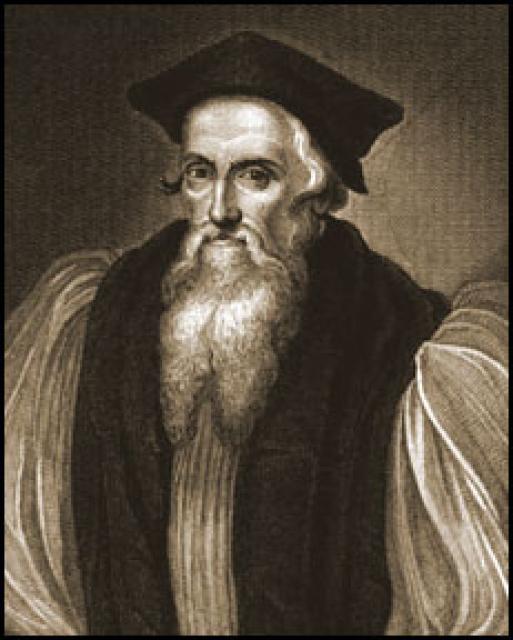
John Aylmer
 Great Britain
- John Aylmer: A Renaissance Scholar, Bishop, and Political Advocate
- Early Career and Religious Controversies
- Response to John Knox and Support for Elizabeth I
- As Archdeacon and Bishop
- Controversial Episcopacy and Legacy
- Later Years and Biography
John Aylmer: A Renaissance Scholar, Bishop, and Political Advocate
Early Life and EducationJohn Aylmer was born in 1521 at Aylmer Hall, Tilney St. Lawrence, Norfolk. Recognizing his exceptional intellect, Henry Grey, the 3rd Marquess of Dorset, sent him to Cambridge, where he became a scholar at Queens' College.
Early Career and Religious Controversies
After returning home around 1541, Aylmer became chaplain to the Duke of Dorset and tutor in Greek to his daughter, Lady Jane Grey, who would later briefly reign as Queen of England. His appointment as Archdeacon of Stow was followed by his opposition to the doctrine of transubstantiation in the Convocation of Clergy, leading to his deprivation and exile to Switzerland.
Response to John Knox and Support for Elizabeth I
While in exile, Aylmer penned "An Harborowe for Faithfull and Trewe Subjects" in response to John Knox's "The First Blast of the Trumpet Against the Monstrous Regiment of Women." In his work, Aylmer defended the right of Princess Elizabeth to the throne, earning her favor upon her accession.
As Archdeacon and Bishop
After Elizabeth I's coronation, Aylmer was reinstated as Archdeacon of Stow in 1559, and later of Lincoln in 1562. He participated in the Convocation of 1562, which reformed and established the doctrine and discipline of the Church of England. In 1576, Aylmer was appointed Bishop of London, a position he would hold until his death.
Controversial Episcopacy and Legacy
As Bishop of London, Aylmer gained notoriety for his harsh treatment of religious dissenters, including both Puritans and Roman Catholics. His actions prompted numerous attacks, including the infamous Marprelate Controversy pamphleteering war. Poet Edmund Spenser satirized him as Morrell, an unrighteous shepherd. Aylmer's reputation as a scholar was overshadowed by his controversial episcopacy.
Later Years and Biography
John Aylmer passed away on June 3, 1594, at the age of 73. His life and work were chronicled in a biography published in 1701 by historian John Strype.


