John Gregory Jacobs
 USA
USABiography of John Gregory Jacobs
John Gregory Jacobs was an American social activist, representative, and leader of several student and anti-war movements. He was the head of the organization "Students for a Democratic Society" and the Weatherman group, and was a strong advocate for the overthrow of the US government through violent means. Jacobs was born into the family of Douglas and Lucille Jacobs in New York. His father was a well-known "leftist" journalist, one of the first Americans to report on the Spanish Civil War. Later, his parents moved to Connecticut, where Douglas Jacobs owned a bookstore. John's childhood was quite happy, and he had a warm relationship with his parents.
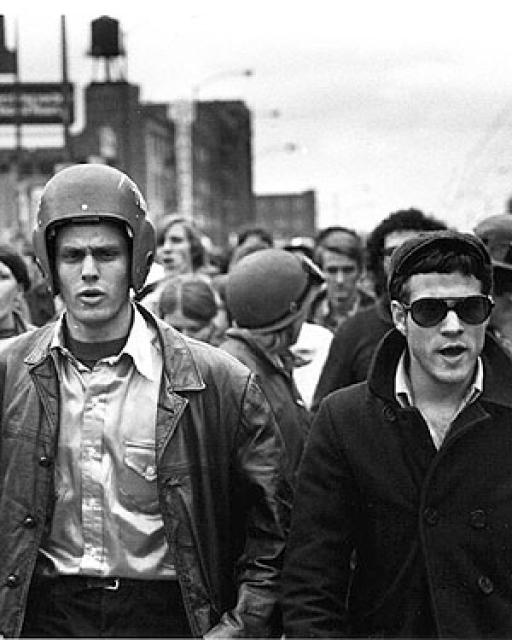
In school, Jacobs became interested in Marxist philosophy, and he was particularly fascinated by the history of the Russian Revolution in 1917. One of his idols was the legendary Argentine revolutionary Che Guevara. After finishing high school in 1965, Jacobs enrolled in Columbia College of Columbia University. During the summer vacation before starting college, he worked for a "leftist" newspaper and quickly established strong connections in the relevant political circles.
In college, Jacobs met another future political figure, Mark Rudd, and they soon became good friends. Naturally, such an active young man could not resist joining the student movement, and the chapter of the "Students for a Democratic Society" was already open at Columbia University in the 1950s. In 1965, the group was at the peak of its power, and Jacobs became one of its most active members. At that time, students were actively protesting against the actions of the military, the CIA, and major industrial corporations. Jacobs personally organized a protest in February 1967 against recruiting conducted by intelligence representatives on the university campus. Initially, his actions were not approved by SDS, but it became clear that John had a great deal of authority among the students, and his sit-in strike became incredibly popular. As a result, the university's president, Grayson L. Kirk, banned such protest actions on campus.
In March 1967, a member of SDS, Bob Feldman, accidentally uncovered documents in the campus library confirming the university's connection with the Institute for Defense Analyses, a research group affiliated with the Department of Defense. Jacobs participated in a protest against this collaboration and was punished for his involvement. Meanwhile, SDS split in half, with one faction called "Praxis Axis" supporting more organized and nonviolent methods, while the other faction called "Action Faction" demanded more aggressive actions. Soon, the "actionists" gained the upper hand on campus, and John, of course, belonged to them.
When Martin Luther King was assassinated, riots swept through much of American cities. Jacobs spent a lot of time in Harlem, witnessing firsthand the lawlessness and the authorities' inability to maintain order. He realized that he could not tolerate this anymore and chose the phrase "Courage, courage, and more courage!" from Georges Danton as his motto. The opportunity to make a statement came to Jacobs shortly after King's death. The university planned to build a new gymnasium in the southern part of the campus, with two entrances - one from the north for students and one from the south for residents of Morningside Heights. The majority of residents in Morningside Heights were African American, and the project gave the impression that blacks would only be allowed to use the facility through the back door. On April 23, 1968, Rudd and Jacobs led a group of 500 protesters. Some of them attempted to take over the library but were dispersed by opponents of the demonstrations among more conservative students. Some protesters started tearing down the fence surrounding the construction site, and the local police arrested them. In the end, the rioters surrounded Hamilton Hall and took the dean hostage. At night, several young black men, reportedly armed, entered the building and ordered the whites to leave. Eventually, the whites also took over the library. Over the next week, more than 1,000 students joined the protest. Jacobs prepared for active defense, but the police did not rush to attack. Then, John set fire to one of the offices, for which he was later accused by the authorities. The number of participants in the protests continued to grow, and Rudd and Jacobs became national heroes.
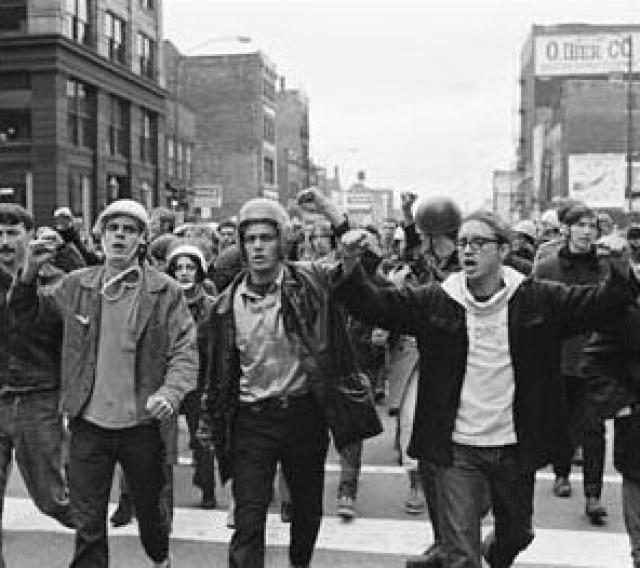
Gradually, Jacobs became more and more radical, and SDS, which had started actively collaborating with progressive laborists, no longer satisfied him. Jacobs published a peculiar manifesto titled "You Don't Need a Weatherman to Know Which Way the Wind Blows," and from that moment on, the "Weatherman group" came into existence. Their actions were characterized by incredible determination. For example, during their protest against the Vietnam War in 1969, the unrest lasted for four days and cost the government $183,000. Jacobs spent the last 27 years of his life on the run and was accused of organizing the "Days of Rage" in Chicago and the bombings in Greenwich Village. In 1996, Jacobs was diagnosed with melanoma, which gradually spread to his lungs, lymphatic system, and brain. The activist passed away on October 20, 1997.