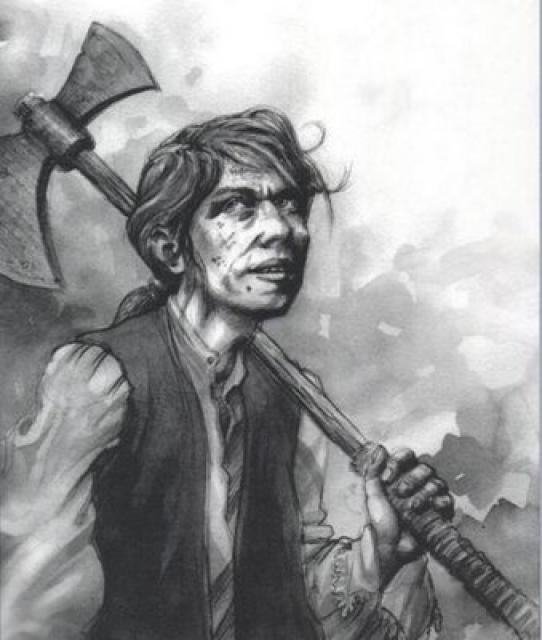
John Ketch
 Great Britain
Biography of John Ketch
John Ketch, a notorious English executioner during the reign of Charles II, gained notoriety for his service during the disorders of the 1680s. Executions were carried out regularly during this time, and often it was Ketch who had to carry them out. He took up the position in 1663, although official documents about his appointment that year have not been found. The first mention of Ketch's name dates back to December 2, 1678, when a miniature of him offering a characteristic "remedy for vile rebels" appeared in the newspaper spread titled "The Plotters Ballad."
A Reputation for Cruelty
John Ketch stood out among his colleagues not only for his obvious cruelty but also for his astonishing, and often suspicious, clumsiness. Lord Russell, mentioned earlier, was executed quite carelessly, and an official apology was even published in "Esquire" on behalf of Ketch. The executioner claimed that he had been distracted right before delivering the fatal blow, and the prisoner was placed on the scaffold in an extremely uncomfortable manner. This was not the only occasion when Ketch, whether out of sadism or simply due to clumsiness, made the victim suffer by inflicting extremely painful but non-fatal blows. Even by the standards of regular attendees of executions, who considered this grim spectacle to be one of the few entertainments available to the common people at the time, John Ketch was considered excessively cruel.
Moments of Controversy
On July 15, 1685, James Scott, already aware of Russell's fate, paid Ketch six guineas to ensure that he would execute him properly. Monmouth promised that Ketch would receive additional gold after the execution; unfortunately, the executioner failed to earn it. With his first blow, John barely scraped the condemned man; the next two blows were more successful, but the head still did not separate from the body. The crowd watching the execution became furious, and Ketch threw down his axe, stating that he simply could not finish what he had started. However, the sheriff forced him to pick up the discarded weapon, and with two additional blows, John finally completed the execution, dispatching the Duke. Even after this, the head remained attached to the body, and Ketch had to use a butcher's cleaver to sever it. Such cruelty and unprofessionalism angered the crowd, and the executioner was taken away from the scene under increased security.
Dismissal and Legacy
In the end, John Ketch was removed from his position as an executioner, and a former butcher named Paskah Rose was appointed in his place. Rose served as an executioner for only four months before he was hanged at Tyburn. The authorities were then forced to call Ketch back to his former position. John Ketch passed away in 1686. Even to this day, his name is often used as a generic epithet for an executioner. Many writers, including Charles Dickens, have mentioned John's name in their works.


