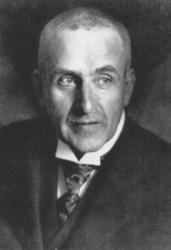
John Lyly
 Great Britain
John Lyly: Biography
John Lyly was an English playwright and novelist, known for his contributions to the Elizabethan literary scene. He was born in Canterbury, possibly around the year 1553. As the grandson of the renowned grammarian William Lily, it might be said that Lyly had a literary pedigree.
After completing his Bachelor's degree (1573) and Master's degree (1575) at Oxford University, Lyly moved to London in the hopes of gaining favor at court. It was there that he achieved fame with his novel "Euphues: the Anatomy of Wit" (1578) and its sequel "Euphues and His England" (1580). "Euphues," which is considered to be the first secular novel in English literature, was immensely popular among Lyly's contemporaries.
The plot of "Euphues" revolves around the love stories of Euphues and his friend Philautus, serving as a framework for a meticulously depicted panorama of the morals and culture of contemporary society. Lyly gradually reveals the spiritual standards and circle of interests of a Renaissance individual, doing so in an extremely artificial and pretentious stylistic manner that later became known as "Euphuism." This euphuistic style was an artful demonstration of the possibilities of verbal acrobatics, with antitheses, rhetorical questions, parallelism, alliteration, and assonance complemented by pithy aphoristic expressions, allusions to myths, and comparisons from natural history.
Lyly's dramatic works, created between 1584 and 1592, are similar in style and approach to his novels. Apart from the later poem "The Woman in the Moon" and the domestic farce "Mother Bombie," his plays are predominantly comedies, such as "Capaspe" and "Endimion," in which Lyly creates a gallery of picturesque bucolic scenes, combining fragility and idyllic charm with worldly elegance and refined wit.
John Lyly passed away in London in November 1606, leaving behind a body of work that had a significant influence on the development of English literature during the Elizabethan era.