John VII
John VII was pope from 705 to 707, during a period when Rome remained under Byzantine political influence and the papacy was negotiating its relationship with the emperor in Constantinople. A Greek-speaking cleric whose father had served as a Byzantine official in Rome, John is remembered both for his dealings with Emperor Justinian II and for his patronage of the church of Santa Maria Antiqua.
Early Life and Election
Little is known about John’s early life. He was of Greek origin, and his father, Plato, held an administrative position connected with the imperial properties in Rome. John became pope on March 1, 705, after the return of Emperor Justinian II to power in Constantinople. His pontificate lasted just over two and a half years.
Relations with Byzantium
The relationship between Rome and Constantinople was shaped by both political authority and disputes over church discipline. Justinian II sent John copies of the canons of the Quinisext Council, held in Constantinople in 692, and urged him to convene a synod to consider them. The council’s canons included rules that conflicted with some western customs. John did not formally endorse them, reflecting the difficulty of reconciling papal authority with imperial pressure.
The period was also marked by a temporary restoration of more direct Byzantine influence in Italy. John generally pursued a cautious course amid the competing interests of the emperor, the exarch in Ravenna and the people of Rome.
Patronage and Legacy
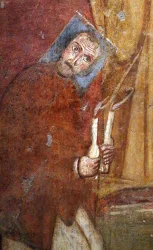
John supported church building and decoration in Rome. He commissioned restorations and frescoes at Santa Maria Antiqua, a church near the Roman Forum, and built an episcopal residence nearby. An oratory dedicated to the Virgin Mary at Old St. Peter’s Basilica was also associated with his patronage. The surviving artwork at Santa Maria Antiqua provides an important record of religious art in early medieval Rome.
John died on October 18, 707, and was buried at St. Peter’s Basilica. Though his pontificate was short, his artistic patronage and careful handling of the Byzantine church dispute left a visible mark on Rome’s religious and political history.