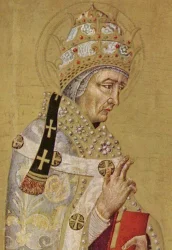
Urban I
Urban I was bishop of Rome from 222 to 230, during the reign of the Roman emperor Alexander Severus. Very little reliable information survives about his life or work. Early church histories record his name and tenure, while later accounts portray him as a martyr and associate him with stories that historians regard as legendary.
Bishop of Rome
Urban succeeded Callistus I in 222. The church historian Eusebius states that he led the Roman Christian community for about eight years. The period under Alexander Severus appears to have been relatively peaceful for Christians compared with later episodes of persecution, although the evidence for Urban’s day-to-day leadership is sparse.
Later tradition credits Urban with supporting the growth of Christian communities in Rome and with promoting the use of silver vessels in church worship. These claims are found in later biographies and cannot be confidently attributed to his pontificate. The same later sources connect him to the story of Saint Cecilia, but that narrative is considered legendary rather than a reliable account of events in the third century.
Martyrdom and Veneration
Urban is honored as a saint in Christian traditions, and later accounts describe him as a martyr. The historical record does not securely establish that he was executed for his faith. Confusion also surrounds the burial place associated with him, since sources refer to more than one cemetery and may conflate the pope with another bishop named Urban.
Historical Assessment
Urban’s significance rests chiefly on his place in the early succession of Roman bishops and on the development of his cult in later centuries. The limited contemporary evidence leaves his personal character and administrative work largely unknown. Separating the historical bishop from the legends that grew around him gives a clearer picture of both the early Roman church and the ways later Christians remembered its leaders.