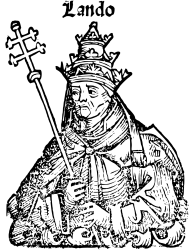
Nicholas II
Nicholas II was pope from 1059 to 1061, during a period of reform and political contest over who should choose the bishop of Rome. Born Gerard of Burgundy, he had served as bishop of Florence before his election. His short pontificate became especially significant for a decree that reshaped the procedure for papal elections and for an alliance with the Norman rulers of southern Italy.
Election and Reform
Gerard was elected at Siena in 1058 amid conflict over the succession to Pope Stephen IX. He took the name Nicholas II and entered Rome with the support of reform-minded church leaders, including Hildebrand, the future Pope Gregory VII. His election took place against the background of rival claims and debate over the influence of the Holy Roman Emperor in papal affairs.
At a Lateran synod in 1059, Nicholas issued the decree known as In nomine Domini. It gave the cardinal bishops a leading role in proposing and selecting a pope, with the other clergy and the people of Rome participating in the process. The measure was intended to limit the influence of Roman political factions and outside powers, though questions over imperial involvement remained contested. The decree became a landmark in the long development of the cardinalate’s role in papal elections.
Alliance with the Normans
Nicholas also sought reliable military support for the papacy. In 1059, he reached an agreement with the Norman leaders Robert Guiscard and Richard of Aversa. The pope recognized their authority over territories in southern Italy, and they pledged loyalty and military service to the Holy See. The arrangement gave Nicholas greater security in Italy while helping legitimize Norman rule.
The pact had lasting effects. Norman rulers and their successors became important political players in the affairs of the papacy and southern Italy. The alliance also reflected the wider reform movement’s effort to secure greater independence from imperial power.
Death and Legacy
Nicholas died in Florence in 1061. His successor, Alexander II, was elected under the principles set out in the 1059 decree, though the election was disputed by opponents and contributed to a schism. Nicholas’s pontificate was brief, but its reforms helped alter the relationship between the papacy, Roman society, the empire, and the emerging Norman powers.