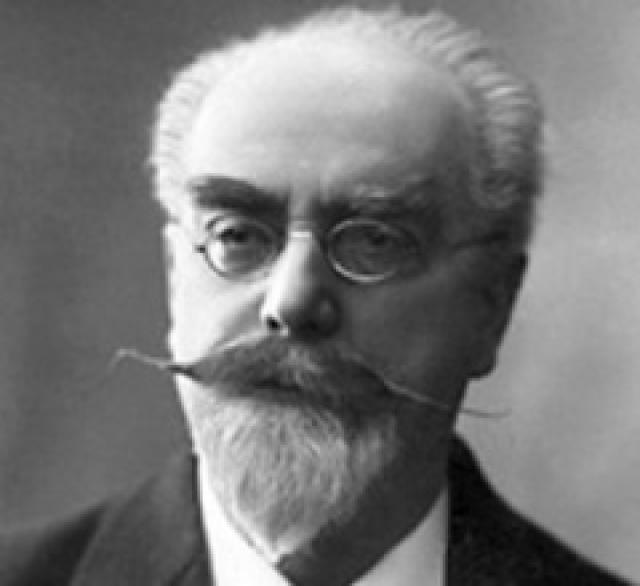
Jonas Ferdinand Gabriel Lippmann
 Luxembourg
- Early Life and Education
- Electricity and the Sorbonne
- A New Way to Photograph Colour
- Recognition and Final Years
Gabriel Lippmann made colour itself a scientific problem. In 1891 he unveiled a photographic process that recorded light through interference patterns within a plate, producing images whose colours came from the physical structure of the photograph. The work earned him the 1908 Nobel Prize in Physics and cemented a career that had already reshaped electrical measurement.
Early Life and Education
Born Jonas Ferdinand Gabriel Lippmann on August 16, 1845, he grew up in Bonnevoie, Luxembourg, to French parents. His family moved to Paris when he was three. His mother provided his early education at home, and he later attended the Lycée Napoléon before entering the École Normale Supérieure in 1868.
After training in Paris, Lippmann travelled to Germany for scientific research and study. In Heidelberg he worked with Gustav Kirchhoff and Wilhelm Kühne, and in Berlin he studied with Hermann von Helmholtz. Those years exposed him to new approaches in physics and helped shape his research on electricity and the behaviour of liquids.
Electricity and the Sorbonne
Lippmann returned to Paris in 1875 and completed a doctorate on the relationship between electrical and capillary phenomena. His research led to the capillary electrometer, an exceptionally sensitive device for measuring small electrical potentials. He also developed an electrocapillary motor, demonstrating how electrical effects could be connected to mechanical work.
His academic career advanced at the Sorbonne. In 1883 he became professor of mathematical physics, and in 1886 he took the chair of experimental physics and became director of the university’s laboratory for physical research. His work ranged across electricity, thermodynamics, optics, and scientific instruments.
A New Way to Photograph Colour
Lippmann’s most celebrated achievement grew out of a question: could a photograph preserve natural colour directly, rather than adding it through dyes or separate exposures? In 1891 he presented an interference-based method. Light entering a photographic plate reflected from a mercury backing, creating interference patterns in the emulsion. When illuminated later, the developed plate reflected the colours encoded in those microscopic layers.
The resulting photographs were remarkable but demanding to produce and view. The process required long exposures, careful handling, and a specific viewing angle. It was difficult to use widely, yet it offered a powerful demonstration of how light waves could be recorded and reconstructed. Lippmann’s Nobel lecture in 1908 explained the method in detail, and the Nobel committee recognized him “for his method of reproducing colours photographically based on the phenomenon of interference.”
Recognition and Final Years
The Nobel Prize brought international recognition to a scientist whose earlier work had already made important contributions to measurement and electrical physics. He continued working at the Sorbonne and in French scientific institutions, serving as a leading figure in the country’s scientific life.
Lippmann died in July 1921 while travelling by ship from Canada to France. His legacy spans both the practical instruments that made delicate measurements possible and an ambitious photographic process that revealed a new way of thinking about colour. Though his method never became a convenient everyday technology, it remains a landmark in the history of photography and optical science.