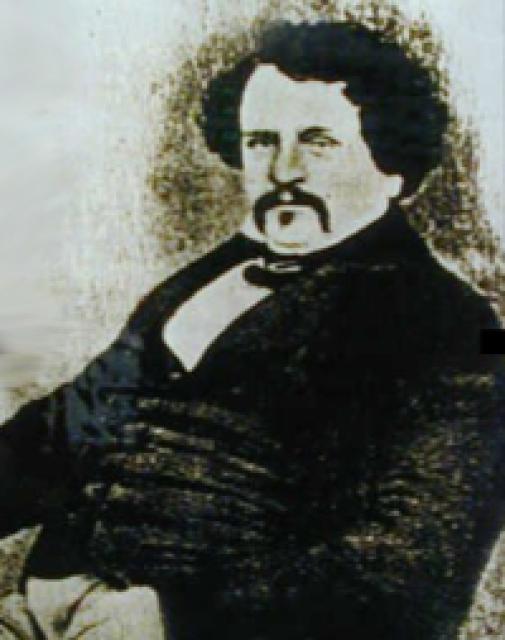
Joseph Aspdin
 Great Britain
Biography of Joseph Aspdin
Joseph Aspdin was born in December 1778 in Hunslet, Leeds, Yorkshire. He was the eldest of six children of Thomas Aspdin, a bricklayer. Joseph was baptized on Christmas in 1778. He joined his father's business and on May 21, 1811, he married Mary Fotherby.
By 1817, Aspdin had established his own business in the center of Leeds. It is likely that he experimented with cement production processes for several years. On October 21, 1824, he obtained a British patent (BP 5022) titled 'Improvements in the mode of producing an artificial stone,' which granted him the right to produce Portland cement. Aspdin coined the term 'Portland cement' in reference to Portland stone, a type of oolitic limestone found on the Isle of Portland in Dorset. He sourced limestone from the Pennine Carboniferous Basin for road paving and construction purposes, often using road debris as raw material.
During this time, Aspdin developed a process known as 'double burning,' which involved first burning the limestone on its own, and then mixing the resulting quicklime with clay before undergoing a second burning. This process was commonly used due to the limited grinding technologies available at the time, which made the burning and slaking process more cost-effective than crushing. Shortly after obtaining the patent, Aspdin formed a partnership with William Beverley and together they opened a Portland cement factory in Kirkgate, Wakefield. Aspdin obtained a second patent for the process of manufacturing lime in 1825. The Kirkgate factory closed in 1838 after compulsory land acquisition by the Manchester and Leeds Railway Company, and production was relocated to another site.
During this period, Aspdin's eldest son James worked as an accountant in Leeds, while his younger son William managed the factory. In 1841, James joined his father's business, leading to William's departure. In 1844, Joseph retired and handed his share to James. In 1848, James relocated the production of Portland cement to Ings Road, Kent, where an abundant supply of soft limestone was available. The factory remained operational until 1900. Joseph Aspdin passed away at his home in Wakefield on March 20, 1855.
Aspdin named his product 'Portland cement' because the solidified solution reminded him of the finest Portland stone, which was the most prestigious building material in England at the time. His invention targeted the market for plastering systems and architectural precast forms. Aspdin's cement falls under the category of 'artificial' cements, originally developed to compete with hydraulic cement known as Roman cement. Portland cement was also similar to a product created by James Frost.