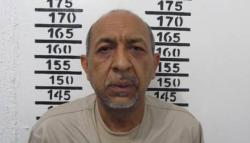
Joseph Bonanno
 USA
USA- Joseph Bonanno: The Head of the Bonanno Crime Family
- Early Life and Rise in the Mafia
- Leading the Mafia
- Ruling the Mafia
- Retirement and Legacy
Joseph Bonanno: The Head of the Bonanno Crime Family
Joseph Bonanno, the head of the Bonanno crime family, was undoubtedly one of the most fascinating figures in American Mafia history. He invented the organization commonly known as the American Mafia and led it for 30 years before voluntarily retiring to live out his days in his luxurious mansion. Bonanno was considered the wealthiest boss of any family and was the first mobster to write an autobiography, which served as the inspiration for Vito Corleone, the main character in the novel and film "The Godfather."
Early Life and Rise in the Mafia
Joseph Bonanno, born as Giuseppe Bonanno, arrived in America in two separate occasions. The first time, his father, Senior Bonanno, brought the family to the United States in 1907, but they returned to Italy eight years later. In 1924, Joseph Bonanno was forced to leave Italy again, this time illegally through Cuba. He later described himself as a political exile fleeing Mussolini's regime, although he was actually wanted by Mussolini's police for involvement in a Mafia dispute.
Bonanno arrived in New York and immediately joined forces with Salvatore Maranzano, who had become the head of a powerful mafia clan controlling Brooklyn. Bonanno quickly rose through the ranks, and after about four years, the Maranzano gang became the primary illegal liquor suppliers in New York City. This caused friction with the then boss of the New York Mafia, Giuseppe Masseria, who attempted to negotiate with Maranzano but was rejected. It is said that Maranzano's lieutenant, Joseph Bonanno, was a key opponent of the agreement with Masseria. Under Bonanno's command, Masseria's representatives were ambushed and killed on their way to a meeting with Maranzano's envoys.
Leading the Mafia
The war between the Maranzano and Masseria clans lasted for three years. Bonanno coordinated actions with Masseria's allies, Charlie "Lucky" Luciano and Vito Genovese. The war between Maranzano and Masseria was orchestrated by Bonanno, Luciano, and Genovese to take over their bosses' positions. During this time, Joseph Bonanno acquired the nickname he despised for the rest of his life - "Joe Bananas." The nickname arose from the fact that illegal alcohol was transported in trucks that were typically used to transport bananas.
In 1931, Giuseppe Masseria and Salvatore Maranzano were both assassinated. Immediately afterward, all thirty major mafia clans in America received invitations for an extraordinary meeting. Under pressure from the new leaders Bonanno, Luciano, and Genovese, smaller mafia factions agreed to unite under the leadership of the five dominant families - Gambino, Genovese, Lucchese, Colombo, and Bonanno. The leaders of these families formed the Commission, which was responsible for resolving all disputes. At 26 years old, Joseph Bonanno became the youngest boss in the history of the American Mafia.
Ruling the Mafia
During Bonanno's leadership, the years were considered the most successful in the history of the American Mafia. The Bonanno family's power extended beyond New York City, as they controlled various illegal businesses throughout the East Coast of the United States. The family profited from activities such as extortion, kidnappings, drug trafficking, prostitution, gambling, and the funeral home industry. Bonanno's empire even extended into Canada, with Montreal becoming a major transit point for heroin imported from Europe into the United States. Despite his notoriety within the Mafia hierarchy, authorities never managed to convict Bonanno of any illegal activities. His only significant confrontation with law enforcement occurred during World War II when it was discovered that his textile factories were not paying workers for their overtime. Bonanno was fined a mere $500, while other Mafia bosses faced more severe consequences.
Retirement and Legacy
In October 1964, New York City was shocked by the news of Joseph Bonanno's kidnapping. However, it soon became apparent that Bonanno had orchestrated his own abduction, allowing him to escape the attention of both law enforcement and rival mob families. He returned to New York after a year and a half and then moved to Arizona, specifically to the city of Tucson. He publicly disassociated himself from his New York properties and lived a quiet life. The Mafia practically forgot about him, and authorities stopped pursuing him.
Twenty years later, Bonanno once again made headlines by writing his autobiography, "A Man of Honor." The book provided valuable insights into the inner workings of Mafia clans, the existence of the Commission, the reasons behind Bonanno's retirement, and even how he orchestrated his own abduction to evade law enforcement. This led to his arrest and subsequent one-year prison sentence. After his release, Joseph Bonanno lived for another 16 years.
Joseph Bonanno, also known as "Joe Bananas," quietly passed away on May 11, a year ago, at the age of 97. He was surrounded by his loving grandchildren and great-grandchildren. His funeral took place on May 20, 2002, at St. Peter and Paul Catholic Church in Tucson, Arizona, where his three children, fourteen grandchildren, and seventeen great-grandchildren paid their final respects.