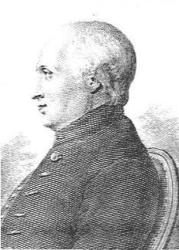
Joseph Butler
 Great Britain
- Joseph Butler: English Moral Philosopher
- Ecclesiastical Career
- Critique of Psychological Hedonism
- Concept of Moral Consciousness
- Contributions to Deontological Ethics
- Theoretical Approach to Moral Questions
- Defense of Virtue and Religion
- Conclusion
Joseph Butler: English Moral Philosopher
Early Life and EducationJoseph Butler, an esteemed English moral philosopher, was born in 1692. In 1715, he enrolled at Oriel College, Oxford, where he pursued his philosophical studies. Upon graduating and being ordained in 1718, Butler was appointed as a preacher at a London church.
Ecclesiastical Career
Butler's ecclesiastical career flourished as he rose through the ranks of the Church of England. In 1738, he became the Bishop of Bristol, and in 1740, he was appointed Dean of St Paul's Cathedral. His ecclesiastical responsibilities did not diminish his philosophical pursuits.
Critique of Psychological Hedonism
Butler was a staunch critic of psychological hedonism, the theory that all human actions are motivated by the pursuit of pleasure. He argued that humans are capable of acting on moral principles even when they conflict with their personal interests.
Concept of Moral Consciousness
Butler developed a unique concept of moral consciousness. He believed that humans possess an innate sense of right and wrong that guides their moral decision-making. This moral consciousness, he argued, is not derived from reason or self-interest but is fundamental to human nature.
Contributions to Deontological Ethics
Butler's work significantly contributed to the development of deontological ethics, which emphasizes the importance of duty and moral obligations. He maintained that moral actions are those that conform to objective principles, regardless of the consequences.
Theoretical Approach to Moral Questions
Butler believed that moral philosophers should approach moral questions from both an abstract and an empirical perspective. While theoretical reasoning can provide general insights, empirical observation of human behavior and social interactions is crucial for a comprehensive understanding of morality.
Defense of Virtue and Religion
In an era of moral decline and skepticism towards religion, Butler emerged as a vocal advocate for virtue and religious belief. He argued that the principles of morality are compatible with the existence of a divine creator and that they provide the foundation for a flourishing and harmonious society.
Conclusion
Joseph Butler's philosophical legacy continues to inspire and challenge scholars and practitioners of ethics. His insights into the nature of morality, the role of conscience, and the defense of religion have left an enduring impact on the field of philosophy.