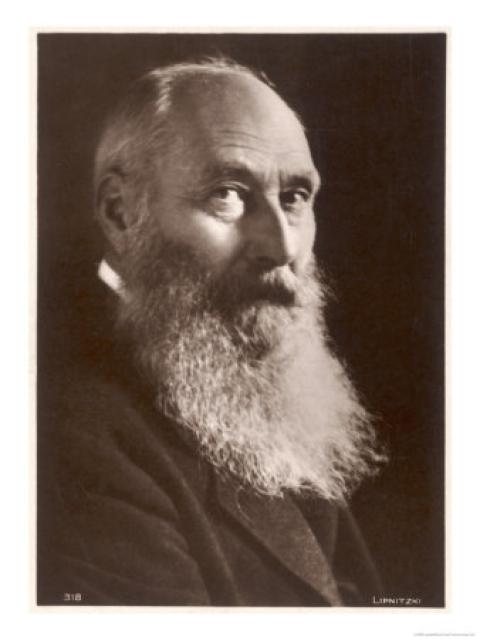
Joseph Ropartz
 France
- Guy Ropartz: A Musical Journeyman
- Affiliation with the "École Franckiste"
- Regional Educator and Composer
- Post-War Years and National Recognition
- Musical Style and Influences
- Choral and Orchestral Works
- Chamber Music and Song Cycles
- Legacy and Influence
Guy Ropartz: A Musical Journeyman
Early Life and TrainingGuy Ropartz, born in Brittany in 1864, embarked on his musical journey at a young age. After legal studies in Rennes, he moved to Paris in 1885 to pursue music at the renowned Paris Conservatory. However, disillusioned with the conservative teaching methods, he left the institution and sought private lessons with César Franck and Vincent d'Indy, both of whom profoundly influenced his musical style.
Affiliation with the "École Franckiste"
Ropartz became a devoted member of the "École Franckiste," a circle of composers who championed Franck's teachings. This affiliation placed him in opposition to the prevailing academic and conservative musical establishment in Paris. In 1894, he accepted the position of director of the Conservatoire in Nancy, where he implemented reforms inspired by Franck's pedagogical principles.
Regional Educator and Composer
Over the next 25 years in Nancy, Ropartz transformed the conservatory into a reputable institution, expanding its curriculum and establishing a symphony orchestra. He also composed prolifically during this period, often incorporating his love for Brittany and its folk music into his works. His opera "Le Pays" (1912) became a notable regional success.
Post-War Years and National Recognition
After the First World War, Ropartz moved to Strasbourg to head its conservatory (1919-1929). His later years were marked by personal tragedy and the devastation of another war. Despite these setbacks, he continued to compose tirelessly. In 1949, at the age of 85, he was finally elected to the Académie des Beaux-Arts, a testament to his enduring legacy.
Musical Style and Influences
Ropartz's music exhibited a deep connection to Franck and d'Indy. Wagner's influence was also evident in his early works. However, his style was distinctly rooted in French tradition. His Celtic heritage and love of Brittany infused many of his compositions with folk melodies and themes.
Choral and Orchestral Works
Ropartz composed numerous choral and orchestral works, including five symphonies, over a dozen symphonic poems, and a "Requiem" (1937) that gained critical acclaim for its dramatic power. His "Chant du soir" (1919) for choir and orchestra captures the melancholic atmosphere of a spring evening.
Chamber Music and Song Cycles
In the realm of chamber music, Ropartz left a lasting mark with six string quartets, two piano trios, and three sonatas for violin and piano. He also composed a number of song cycles for voice and piano, setting texts by French and Breton poets.
Legacy and Influence
Despite his initial struggle for recognition, Guy Ropartz's music has gradually gained appreciation over time. His enduring works have a timelessness that transcends fleeting trends. As a tireless advocate for French music and a bridge between the late Romantic and early Modernist periods, his legacy as a composer and educator remains significant.


