
Joseph Stiglitz
 USA
USA- Biography of Joseph Eugene Stiglitz
- Critical Views and Contributions
- Academic Achievements
- Early Life and Education
- Teaching and Political Involvement
- Personal Life
Biography of Joseph Eugene Stiglitz
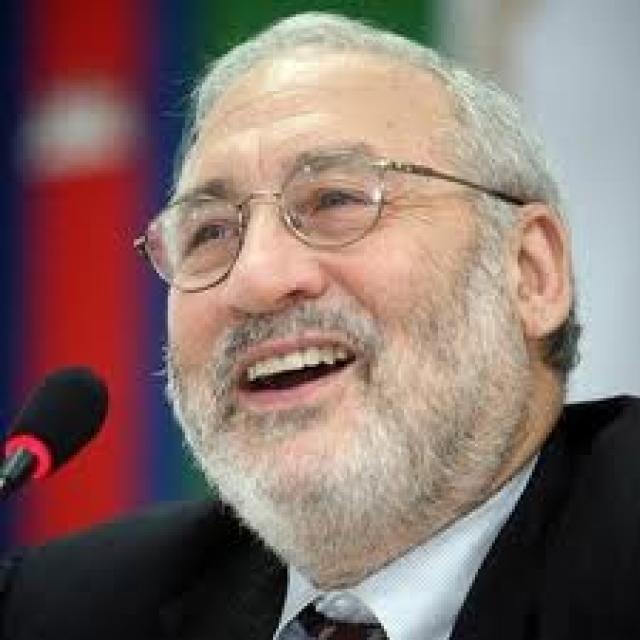
Joseph Eugene Stiglitz is an American economist of the neo-Keynesian school. He is a professor of economics at Columbia University and a member of both The Royal Society and the British Academy. In 2001, Professor Stiglitz was awarded the Nobel Memorial Prize in Economic Sciences, and in 1979, he received the John Bates Clark Medal.

Critical Views and Contributions
Stiglitz is known for his critical stance on the management of globalization, free-market economists (whom he refers to as "market fundamentalists"), and certain international organizations, including the International Monetary Fund and the World Bank. In 2000, he founded the Initiative for Policy Dialogue at Columbia University, which focuses on international development. He has been a professor at Columbia University since 2001 and holds the position of Professor since 2003. Additionally, he heads the Brooks World Poverty Institute at the University of Manchester and is a member of the Pontifical Academy of Social Sciences.
Academic Achievements
Stiglitz has received honorary doctorates from Durham Business School and Tsinghua University School of Public Policy and Management. He is also a member of the executive and advisory committee at CERGE-EI in the Czech Republic. Stiglitz is one of the most frequently cited economists worldwide.

Early Life and Education
Joseph Eugene Stiglitz was born on February 9, 1943, in Gary, Indiana, to a Jewish family. He attended Amherst College from 1960 to 1963, where he was an active debater and president of the student government. From 1965 to 1966, Stiglitz conducted research at the University of Chicago under the guidance of Hirofumi Uzawa. He then studied at the Massachusetts Institute of Technology (MIT), where he obtained his doctoral degree and simultaneously taught. Stiglitz also worked as a research fellow at the University of Cambridge from 1966 to 1970.
Teaching and Political Involvement
Throughout his career, Stiglitz has held academic positions at Yale University, Stanford, Duke, Oxford, and Princeton. Currently, he teaches at Columbia University's Business School, the School of International and Public Affairs, and the Institut d'Études Politiques de Paris. In addition to his substantial contributions to microeconomics, Stiglitz has played an important role in politics. He served as the Chairman of the Council of Economic Advisers under the Clinton administration from 1995 to 1997. From 1997 to 2000, he held the positions of Senior Vice President and Chief Economist of the World Bank but resigned due to disagreement with its policies. He was also a lead author for the Intergovernmental Panel on Climate Change.
Personal Life
On October 28, 2004, Professor Stiglitz married journalist Anya Schiffrin, who also teaches at Columbia University. She is 20 years younger than him. Stiglitz is a member of Collegium International, an organization that brings together global leaders in politics, science, and ethics to develop new approaches for a peaceful, socially just, and economically sustainable world. He is also a member of the scientific committee of Fundacion IDEAS, a Spanish think tank.


