Josephine Leuchtenberg
 Sweden
- Joséphine of Leuchtenberg: A Matriarch in Sweden and Norway
- Bavarian Legacy
- Arranged Marriage and Arrival in Sweden
- Unresolved Tensions
- Religious Tolerance and Charitable Works
- Legacy of Catholic Revival
Joséphine of Leuchtenberg: A Matriarch in Sweden and Norway
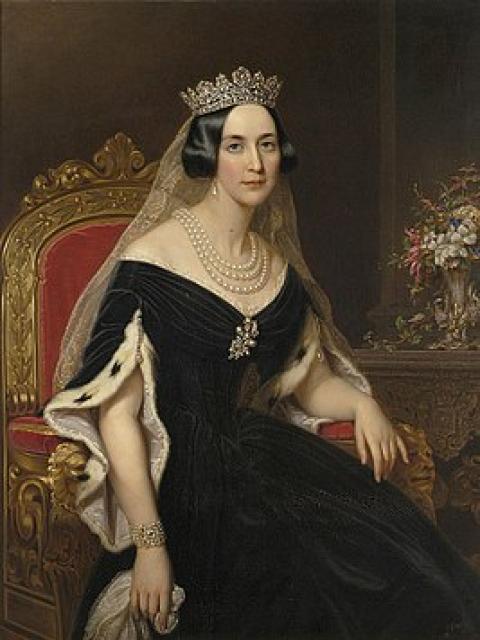
Early Life in ItalyJoséphine of Leuchtenberg was born on March 14, 1807, in Milan, Italy. The eldest daughter of Eugène de Beauharnais, first Duke of Leuchtenberg, and Princess Augusta of Bavaria, she was named after her paternal grandmother, Joséphine de Beauharnais, the first wife of Emperor Napoleon I. Joséphine grew up with her four sisters and two brothers.
Bavarian Legacy
After the downfall of the French empire, Joséphine's family relocated to Bavaria, where her grandfather, King Maximilian I, granted them royal status in 1817. Joséphine became Princess of Bologna and later the first Duchess of Galliera.
Arranged Marriage and Arrival in Sweden
In 1823, at the age of 16, Joséphine married Crown Prince Oscar of Sweden, who would later become King Oscar I. The marriage was arranged to strengthen ties between the Bernadotte dynasty of Sweden and the deposed Swedish Vasa dynasty, which Joséphine claimed descent from through her mother. She brought with her a significant collection of jewels that had belonged to her maternal grandmother, Empress Joséphine.
Unresolved Tensions
Initially, the marriage was a happy one. However, Joséphine's husband's infidelities were kept a secret from her. When she eventually discovered the truth, it deeply wounded her and shattered her sense of happiness in Sweden. For nine years, the couple lived in estrangement, although they maintained public appearances.
Religious Tolerance and Charitable Works
Raised a devout Catholic, Joséphine nevertheless agreed to raise her children in the Lutheran faith. She brought with her a Catholic priest and regularly attended mass in her private chapel, with the approval of the Pope. Despite her own deep faith, she believed that charity was not solely a religious duty but also a state obligation.
Legacy of Catholic Revival
In 1837, Joséphine's donations helped build a church for the Catholic congregation in Stockholm, the first since the Reformation. She also established Catholic churches in Gothenburg and Oslo. Her influence contributed to a gradual revival of Catholicism in Sweden and Norway.