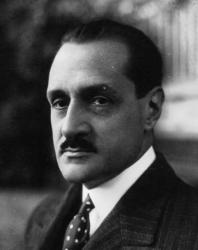
Juan De la Cierva
 Spain
Spain- Early Life and Interest in Aviation
- Development of the Autogyro
- Introduction of the Autogyro to England
- Refinements and Popularity
- Shift to Helicopters and Tragic Death
Early Life and Interest in Aviation
Juan de la Cierva, the Spanish engineer and aviation pioneer, was born into a wealthy family in Murcia, Spain. He developed a passion for aviation at a young age, and by 1912, his interest had become serious.
Development of the Autogyro
Cierva recognized the potential of using a rotating wing to generate lift at low speeds, preventing an aircraft from stalling. In 1919, he began experimenting with this concept, known as autorotation. He soon discovered that the main challenges lay in balancing the craft and ensuring equal lift on both advancing and retreating blades.
In 1923, after numerous failed attempts, Cierva achieved a breakthrough by inventing the rotor hub, which allowed for proper lift distribution. This led to the creation of the first successful autogyro, a heavier-than-air craft that relied on a rotating wing for lift.
Introduction of the Autogyro to England
In 1925, Cierva presented his Autogiro C-6 to the British Air Ministry. With its four-bladed rotor and conventional aircraft controls, the C-6 impressed the British authorities. Cierva was invited to continue his work in England, where he partnered with James G Weir to form the Cierva Autogiro Company, Ltd.
Refinements and Popularity
Focusing on rotor design, Cierva introduced improvements with the C-8, including a more powerful engine and vertical hinges. However, these hinges did not fully solve the problems encountered, leading Cierva to explore other options. Encouraged by his success, he developed the C.8L4, which competed unsuccessfully in the 1928 Kings Cup Air Race.
Cierva's autogyros gained popularity as they flew across the British Isles and made the first rotary-wing crossing of the English Channel. However, the take-off process remained a challenge. The C19 Mk.4 addressed this issue, but the C-40, featuring a jump start, provided a more effective solution.
Shift to Helicopters and Tragic Death
Towards the end of his life, Cierva recognized the advantages of helicopters and planned to redirect his work. However, tragedy struck on December 9, 1936, when the DC-2 aircraft he was boarding at Croydon Airfield crashed into a house due to dense fog. Juan de la Cierva, the renowned inventor and aviation pioneer, was killed in the incident.