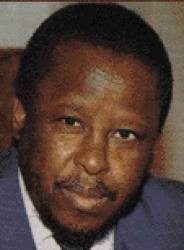
Juan Negrin
 Spain
SpainBiography of Juan Negrin
Juan Negrin was a Spanish political figure and physiologist. He served as the Prime Minister of Spain from 1937 to 1939 during the Spanish Civil War. Born into a prosperous entrepreneurial family, Negrin obtained his bachelor's degree from the private college La Soledad in 1906. He studied medicine in Germany at the universities of Kiel and Leipzig, where he was taught by the renowned physiologist and psychologist Ewald Hering. In 1912, he earned his doctorate in medicine. Negrin then worked at Leipzig University and, after the start of World War I, he engaged in teaching activities due to the mobilization of many physician-educators. In 1914, he married the pianist Maria Fidelman Brodsky, who came from a wealthy family of Russian origin living in the Netherlands. They had five children together, three sons (Juan, Romulo, Miguel) and two daughters who died at a young age. During his studies in Germany, Negrin learned German, English, and French. He translated the monograph "Anaphylaxis" by the famous French physiologist Charles Richet from French to German. In 1916, Negrin returned to Spain and worked at the main laboratory of general physiology in Madrid under the guidance of Nobel laureate Santiago Ramon y Cajal. In 1919, he obtained a degree in medicine and surgery, confirming his German diploma, and defended his doctoral dissertation in 1920. From 1922, he was a professor of physiology at the Central University of Madrid, where he established a renowned scientific school. Negrin was considered one of the best Spanish physiology professors of his time, alongside future Nobel laureate Severo Ochoa and Francisco Grande Covian. For a long time, he remained detached from political activities and joined the Spanish Socialist Workers' Party in 1929 during the dictatorship of Miguel Primo de Rivera. After Spain declared itself a republic in 1931, Negrin was elected as a deputy to the Cortes (parliament) from Las Palmas. He was reelected in 1933 and 1936, and served as the chairman of the financial commission of the Cortes. Negrin also represented the republic in the International Labour Organization and the Inter-Parliamentary Union. Although not a charismatic speaker, he was not well-known among the general public. Negrin was an atypical politician for the socialists. As a university professor, he was never associated with trade unions and held moderate views, showing little interest in Marxist theory. He was a supporter of Indalecio Prieto, the leader of a centrist faction within the party. Negrin displayed his managerial abilities when he participated in the organization of the construction of a university campus in Madrid. During the Spanish Civil War from 1936 to 1939, Negrin served as the Minister of Finance in the socialist government of Francisco Largo Caballero as a representative of the Prietistas faction from September 4, 1936, to May 17, 1937. In this role, he organized the financial system of the republic under war conditions and supervised the government's decision to send the majority of the Bank of Spain's gold reserves (460 out of 635 tons) through Cartagena to Moscow to prevent it from falling into the hands of the republic's enemies. These funds were used to purchase weapons, ammunition, and food supplies for the Republican army in the Soviet Union. Nationalist supporters, who were fighting against the government, considered this operation to be theft since the country's gold reserves belonged to the Bank of Spain, which was officially a joint-stock company until 1962. Additionally, Negrin transformed the Carabinero Corps (border guards and customs officers) into an elite, well-equipped military force that was personally loyal to him. This group, known as the "Hundred Thousand Children of Negrin," operated autonomously from other armed structures and was involved in confiscating valuables from banks, pawnshops, private homes, churches, and monasteries. Negrin faced criticism for the excessive expenses associated with the activities of the Carabineros and for conducting a "opaque" financial policy. At the same time, his firmness and determination, as well as his pragmatic efforts to reach an agreement with the Communists, drew the attention of the Soviet leadership. In May 1937, the government of Largo Caballero lost the support of the Communists, Prietistas, and left-wing Republicans due to military failures and conflicts between different factions supporting the republic. On May 17, 1937, Negrin formed a new cabinet, which included Prieto as the Minister of Defense and former Prime Minister Jose Giral as the Minister of Foreign Affairs. The Communist Party was represented by only two ministers, but their influence on decision-making was significant due to their control over the army and close ties with Negrin. As the Prime Minister, Negrin oriented himself toward the Soviet Union, although he personally tried to maintain distance from Soviet advisors. He allowed the Communists, with the support of the Soviet secret services, to defeat the Trotskyist organization POUM and physically eliminate its leader Andreu Nin. He also had strained relations with most of the anarchists. Negrin pursued a course focused on improving the government's efficiency and strengthening its power, as well as reinforcing the army, establishing state control over industry, and organizing the rear more rationally. From October 1937, his government was based in Barcelona, which significantly weakened the autonomy of local authorities. However, despite these measures, the Republican forces were not successful in their struggle against the Nationalists. The reasons for this included ongoing conflict within the Republican camp, a loss of faith in victory among many supporters of the republic, and a lack of qualified military leadership. From 1937 to 1938, the Republic lost a significant part of its territory. Negrin's alignment with the Communists led to a conflict with Prieto, who was considered by the Communists and Soviet advisors to be one of the main culprits for the defeats on the frontlines and a supporter of a "capitulationist" policy. In April 1938, Prieto was dismissed, and from then on, Negrin combined the leadership of the government with the Ministry of Defense. This further strengthened the position of the Communists in the Republican leadership. Demonstrating a desire for compromise, Negrin proposed a peace plan consisting of thirteen points to the Nationalists on April 30, 1938. The plan included the independence of Spain, the absence of foreign armed forces on its territory, a democratic republic with a strong government, a referendum on the country's future system, regional freedoms without compromising the unity of Spain, the protection of legitimate property, the elimination of semi-feudal relations in rural areas, guarantees of workers' rights, a non-politicized and non-partisan army, and broad amnesty. However, this plan, proposed after Republican military failures and perceived as a forced step, was rejected by General Francisco Franco, who demanded the complete surrender of his opponents. After the failure of the peace plan, Negrin initiated a large-scale offensive by the Republicans in the Ebro River area. Despite tactical successes in the initial days, the offensive ultimately failed. In the autumn of 1938, Negrin agreed to withdraw the International Brigades, which belonged to the most combat-ready units of the Republicans, from Spain. By that time, the Soviet leadership had largely lost hope for victory over the Nationalists. In early 1939, the Republicans lost control over Catalonia, and Negrin was forced to flee to France, from where he and his closest colleagues soon flew to the Madrid region to continue military operations. By this time, Negrin hoped for the imminent start of a major European war that would polarize the main European countries and lead to effective support from governments opposing Franco's allies, Germany and Italy. However, the Munich Agreement in October 1938 delayed the start of the war for nearly a year, and the Spanish Republicans were unable to hold on until that time. In early 1939, even Negrin was inclined to accept peace with an amnesty, but Franco once again rejected it. By the beginning of spring 1939, many Republican military leaders had lost all hope for success, leading to an uprising against Negrin's government. The leaders of this uprising were Colonel Casado and General Miaja, who sought to end the war as soon as possible and considered Negrin an obstacle to reaching agreements with the Francoists. Despite the support of the Communists, Negrin failed to resist the rebels and, on March 6, 1939, he flew to France with members of his government and some communist leaders. In exile, Negrin lived in France and in 1940, he moved to the United Kingdom, which saved his life as the collaborationist authorities in France handed over republicans to Franco's Spain. After World War II, he returned to France. From 1939 to 1945, Negrin served as the Prime Minister of the Spanish government in exile, although his authority was not recognized by many exiles. Negrin's positions were weakened by the incident involving the yacht Vita, which he ordered to send to Mexico with the country's valuables confiscated by the Carabineros during the war. According to Negrin, the funds were intended to be used by the Spanish Evacuation Service (SERE), which he established, to provide support and transportation for Republican refugees to Latin American countries. However, in Mexico, with the consent of President Lazaro Cardenas, the money came under the control of Prieto, who used it to create his own organization, the Joint Aid Refugee Committee (JARE), which directly assisted refugees by providing them with essential supplies. As a result of this incident, Negrin not only lost control over financial resources but was also accused of corruption. His opponents had previously criticized him for his love of comfort, a fondness for good food and expensive drinks, as well as numerous romantic affairs with women, setting him apart from the standard image of an ascetic revolutionary. In 1945, due to differences with the majority of exiles, Negrin resigned and retired from politics. He spent the last years of his life in France, showing little activity and declining to join the pro-Soviet World Peace Movement. For his role as the head of the Republican government, Negrin faced criticism from Franco's supporters, who considered him a "red traitor," as well as from many Republicans who accused him of a excessive dependence on the Soviet Union and a desire to continue the war in a hopeless situation. However, it should be noted that he took significant risks by returning to the Madrid region in February 1939 when many prominent Republicans chose to stay outside the country. After Negrin's death, one of his sons reportedly handed over documents about the Spanish gold that was taken to the Soviet Union to Franco's government. There is information suggesting that this was done at Negrin's own request.