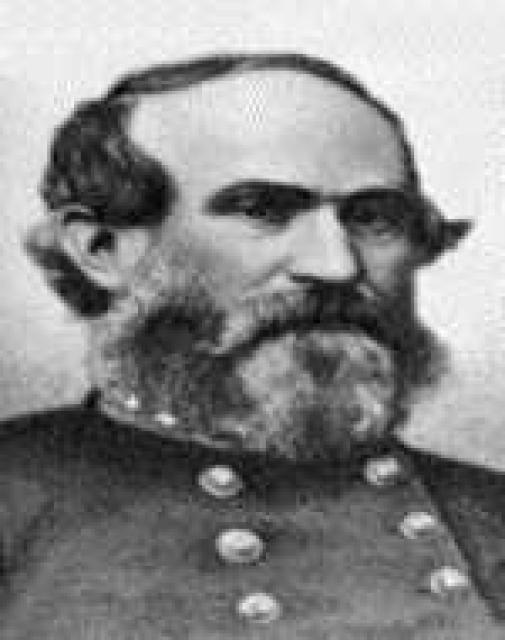
Jubal Anderson Early
 USA
USABiography of Jubal Anderson Early
Jubal Anderson Early, also known as "Old Jube," was a Confederate army general during the American Civil War. He was born in 1816 in Virginia and graduated from West Point. Early was a member of the legislative assembly and voted against secession before the Civil War. Despite his heavy drinking, outspokenness, and irritability, his soldiers admired their exceptional commander and affectionately called him "Old Jube" (a play on his name Jubal).
Early's Military Career
At the outbreak of the war, Early volunteered for the army and distinguished himself as a brigade commander in the First Battle of Bull Run. After the battle, he was promoted to brigadier general and participated in the campaign on the Virginia Peninsula. Early was wounded in the shoulder at the Battle of Williamsburg but recovered and returned to action for the Battle of Malvern Hill. He fought bravely in the Cedar Mountain and Second Battle of Bull Run. His desperate struggle at Antietam earned him command of a division.
Early's excellent performance at the Battle of Fredericksburg led to his promotion to major general, and he continued to be a stalwart of the Southern forces at the battles of Chancellorsville and Gettysburg. Several times, his clear thinking and skillful maneuvering saved his brigade from defeat. General Robert E. Lee appreciated Early's aggressiveness and competency, entrusting him with temporary command of the entire army and placing him in charge of the forces in the Shenandoah Valley during the winter of 1863-1864.
After the spring battles in Wilderness, Spotsylvania, and Cold Harbor, Early was sent back to the valley, where he led his famous raid on Washington. In the final year of the war, he bravely but unsuccessfully fought against General Philip Sheridan in the Shenandoah Valley.
Later Years
After the war, Early lived in Canada for several years. In 1869, he returned to Virginia to practice law but remained an "unreconstructed rebel" bitterly mourning the South's defeat until his death in 1894.