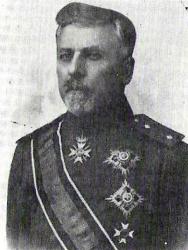
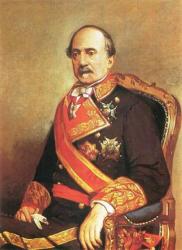
Grigoriy Glazenap
 Vatican
- Early Life and Military Service
- Promotions and Commands
- Under Emperor Paul
- Return to Service and Caucasus Appointment
- Service in the Caucasus
Early Life and Military Service
Lieutenant General Ivan Filippovich Glazenapwas born in 1751 into a noble family of Livonian origin. Receiving a well-rounded education, he entered military service in the 3rd Grenadier Regiment at the age of 14.
Glazenap's military career progressed slowly, but he participated in significant battles of the Russo-Turkish War of 1768-1774, including Ryabe Mogila, Larga, and Kagul. In 1773, he joined the Life Cuirassier Regiment and saw action at Silistria and Karasu.
Promotions and Commands
In 1776, Glazenap was promoted to Rittmeister, and in 1784 to Second Major. During the Second Russo-Turkish War of 1787-1792, he commanded light cavalry detachments and distinguished himself in battles at Ciganki, Sange, Salcuta, and Izmail.
After the war, Glazenap rose through the ranks, serving in various cavalry regiments. In 1795, he received the Order of St. George (4th class) for 25 years of exemplary service.
Under Emperor Paul
Glazenap's advancement accelerated during the reign of Emperor Paul. He was promoted to Colonel in 1798 and Major General in the same year. In 1799, he was tasked with forming his own dragoon regiment, but the order was later rescinded, and he was discharged in 1800.
Return to Service and Caucasus Appointment
Glazenap was recalled to service in 1801 and became the commander of the newly formed Nizhny Novgorod Dragoon Regiment. In 1803, he was appointed Inspector of the Caucasus Cavalry Inspection and commander of the troops on the line.
Service in the Caucasus
Glazenap's service in the Caucasus was characterized by constant skirmishes and battles. He witnessed firsthand the fierce nature of the mountain tribes, whose "peace... meant only cowardice and weakness" and who had "no honor, no conscience, no pity."
Glazenap recognized the challenges of warfare in the region, calling for vigilance, skilled shooters and riders, and lightweight artillery capable of navigating narrow mountain paths. He played a crucial role in defending the Russian interests in the Caucasus against constant threats from the indigenous population.