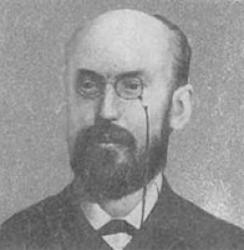
Jules Dupuit
 France
- Biography of Jules Dupuit
- Engineering Career
- Contributions to Economics
- Contributions to Economics Literature
- Legacy
Biography of Jules Dupuit
Jules Dupuit was a French civil engineer, economist, and mathematician. He was born on May 18, 1804, in Fossano, Italy, during the reign of Napoleon Bonaparte. At the age of ten, he emigrated to France with his family and received his education in Versailles. Upon completing his studies, Dupuit attended the renowned Ecole Polytechnique in Paris, where he studied engineering.
Engineering Career
Dupuit initially focused on construction and design of railways, gradually taking on more responsibilities in the field. In recognition of his work in the French railway system, he was awarded the Legion of Honor in 1843. Shortly after, he moved to Paris, where he played a crucial role in addressing the city's flooding issues in 1848 and oversaw the construction of the Parisian sewer system. Dupuit's engineering expertise and contributions greatly impacted the development and infrastructure of France during the 19th century.
Contributions to Economics
Dupuit's interest in engineering led him to explore the field of economics. Although he was self-taught in this area, his contributions were significant. In 1884, he published an article titled "On the Measurement of the Utility of Public Works," which focused on finding an optimal solution for toll collection on bridges. As one of the precursors of marginalism, Dupuit introduced the concept of the diminishing marginal utility curve in the article, disproving the conventional method of determining the economic efficiency of public infrastructure projects. He argued that the more people used a bridge (higher consumption level), the less willing they would be to pay a high toll. Essentially, Dupuit was the first economist to analyze consumer surplus, basing his theory on the concept of marginal utility. Although the demand curve had been derived prior to his work, Dupuit provided evidence through the derivative of the marginal utility curve. However, he did not incorporate the supply curve into his theory.
Contributions to Economics Literature
Dupuit earned a reputation in economics not only through his work "Commercial Freedom" in 1861, which advocated for non-interference by the government in private affairs, business, and trade but also through his extensive contributions to economic publications. He analyzed the potential for economic development, aiming to evaluate the net economic benefit of public services and laying the foundation for the theory of utility and measuring derivative welfare with public works. He also wrote about monopoly and price discrimination. Additionally, Dupuit contemplated the groundwater flow equation, proposing the assumption of constant vertical pressures. He suggested simplifying the equation to create complete analytical solutions by considering horizontal groundwater and hydrostatic flows. This assumption is still widely used in hydrology to this day.
Legacy
Jules Dupuit passed away on September 5, 1866, in Paris. His contributions to both engineering and economics laid the groundwork for further advancements in these fields. His analysis of consumer surplus and the concept of marginal utility have become fundamental principles in economic theory. Dupuit's work continues to influence and shape the understanding of transportation economics, public works evaluation, and the optimization of infrastructure projects. His legacy as a multidisciplinary scholar remains significant in the fields of engineering and economics.