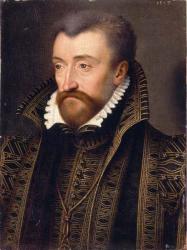
Jules Grevy
 France
- Biography of Jules Grevy
- Early Life and Career
- Political Career
- Presidency
- Resignation
- Later Years and Death
Biography of Jules Grevy
Jules Grevy was a French political figure and the first President of France during the Third Republic from 1879 to 1887. He was a staunch republican and actively opposed the restoration of monarchy.
Early Life and Career
Grevy was born in 1807 in Mouchard, in the department of Jura. He became a prominent lawyer in Paris, gaining attention for his talents and political radicalism. In 1839, he defended two comrades of Barbès, which showcased his political views.
After the February Revolution of 1848, Grevy was sent to his hometown as a government commissioner. In this role, he demonstrated great administrative abilities. He was elected to the Constituent Assembly and established himself as a passionate republican, determined to protect the newly formed republic.
Political Career
Grevy fought against a provision in the constitution that required the president to be elected through universal suffrage. He saw this provision as a potential loophole for authoritarian rule, and his fears were proven right during the presidency of Louis-Napoleon.
During the Second Empire, Grevy opposed Napoleon's policies and withdrew from politics after the coup of December 2, 1851. He dedicated himself fully to his career as a lawyer and was elected as the head of the Paris Bar Association in 1868.
In the final years of the Second Empire, Grevy returned to political activity. He was elected as a deputy for Jura in the Legislative Corps in 1868 and led a group of democratic republicans who refused to make any deals with Napoleon's government.
Grevy also opposed Napoleon's foreign policy ventures and vehemently spoke against the government's decision to go to war with Prussia on July 15, 1870.
Presidency
Grevy was elected as the president of the National Assembly with an overwhelming majority in 1876. He remained in this position until he was elected as the President of the Republic on January 30, 1879, with 563 votes out of 713.
His election marked a period of stability and progress for the republic. Grevy's presidency was characterized by significant achievements in strengthening the republic.
He was reelected as the President of the Republic on December 28, 1885, with a majority of 457 votes out of 589. However, his second term was short-lived.
Resignation
In late 1887, Grevy was forced to resign as a result of public outrage caused by revelations of his son-in-law's scandalous actions. Despite not being personally implicated, Grevy hoped for a change in public opinion and parliament's mood, so he delayed submitting his resignation letter until the appointed time.
However, the Chamber demanded the promised government message before accepting his resignation. Grevy eventually presented his letter, stating that he left power without regret but with sadness, having faithfully fulfilled his duty during his two terms as president.
Later Years and Death
After his resignation, Grevy lived in seclusion, primarily in Mouchard. He passed away on September 9, 1891. His funeral was held at the expense of the state.