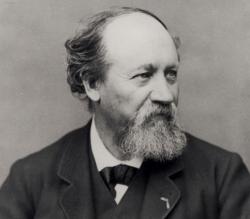
Jules Pascin
 France
- A Life of Boldness and Brokenness: The Story of Jules Pascin
- Parisian Bohemian and "Le Prince de Montparnasse"
- Early Exhibitions and International Recognition
- War, Exile, and American Citizenship
- Return to Paris and International Travels
- Critical Acclaim and Personal Turmoil
- Legacy and Influence
- International Recognition
A Life of Boldness and Brokenness: The Story of Jules Pascin
Early Years and Artistic EducationJules Pascin, a renowned Bulgarian painter and graphic artist, was born into a large Spanish-Sephardic family in 1885. Growing up in a humble household as the eighth of eleven children, Pascin's early life was marked by both financial struggles and a passion for art. He honed his artistic skills in prestigious European academies, studying in Vienna, Munich, and Berlin, while simultaneously contributing to satirical publications such as "Simplicissimus" and "Lustige Blätter."
Parisian Bohemian and "Le Prince de Montparnasse"
In 1905, Pascin relocated to Paris, immersing himself in the vibrant artistic scene of Montparnasse and Montmartre. He adopted the pseudonym "Pascin," an anagram of his surname, and became a regular at the legendary cafés "Le Dôme" and "Le Select." His charismatic personality and bohemian lifestyle earned him the affectionate titles "Le Prince de Montparnasse" and "Le Prince des Trois Collines."
Early Exhibitions and International Recognition
Pascin's first solo exhibition was held at the prestigious Galerie Paul Cassirer in Berlin in 1907. His talent for expressive portraiture and ethereal nudes quickly caught the attention of collectors and critics alike. He illustrated Heinrich Heine's writings and exhibited in prominent international venues such as the Berlin Secession, the Armory Show in New York, and the Salon d'Automne in Paris.
War, Exile, and American Citizenship
In 1914, fearing conscription, Pascin sought refuge in London and later in New York, where he remained until 1920. During his American sojourn, he obtained U.S. citizenship while continuing to explore his artistic interests.
Return to Paris and International Travels
Upon his return to Paris, Pascin's artistic career flourished once more. He embarked on extensive travels to Cuba, Algeria, Tunisia, Italy, Spain, and Portugal, incorporating exotic influences into his work. Despite his newfound success, Pascin struggled with chronic depression and self-doubt.
Critical Acclaim and Personal Turmoil
The 1930 New York exhibition of Pascin's work received mixed reviews, leaving him deeply disillusioned. Haunted by personal demons and a sense of inadequacy, he tragically took his own life in his Paris studio in 1930.
Legacy and Influence
Despite his short and tumultuous life, Jules Pascin left an enduring mark on the art world. Known for his masterful caricatures, expressive portraits, and atmospheric nudes, Pascin's work continues to captivate audiences with its bold colors, raw emotionality, and timeless appeal. His influence can be traced in the works of renowned artists such as Henri Matisse and Pablo Picasso.
International Recognition
Pascin's legacy has gained global recognition in recent years. In 2008, a major retrospective of his work was held at the Prooun Gallery in Moscow, showcasing his diverse talents and the enduring power of his artistic vision.