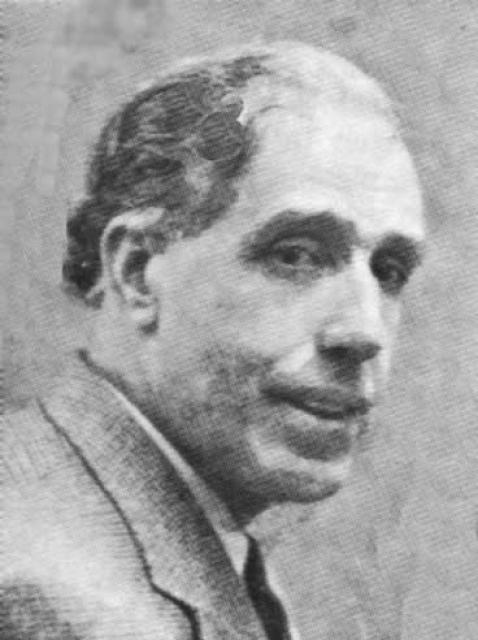
Julian Besteiro
 Spain
Spain- Julio Besteiro: Socialist Leader and Intellectual
- Political Activism
- Socialist Beliefs
- Rise in the PSOE
- Leadership of the PSOE
- Republican and Civil War
- Legacy
Julio Besteiro: Socialist Leader and Intellectual
Early Life and EducationJulio Besteiro was born in Madrid, Spain, into a prominent family. He attended the Institute of Free Education, a secular institution that fostered critical thinking and intellectual pursuits. Besteiro then enrolled in the Faculty of Philosophy and Letters at the University of Madrid, where he graduated with honors in 1895.
During his university years, Besteiro became involved with Republican student groups. In 1896, he continued his studies at the Sorbonne in Paris.
Political Activism
Besteiro's political career began in 1897 when he was appointed to the chair of psychology, logic, and ethics at the Institute of Orense. From 1899 to 1908, he taught in Toledo, translating works from French and English.
In 1903, Besteiro joined the Republican Union, founded by Nicolás Salmerón and Alejandro Lerroux. That same year, he was elected to the municipal council of Toledo.
Socialist Beliefs
In 1908, after the Republican Union split, Besteiro aligned himself with Lerroux's Republican Radical Party. However, he returned to his Socialist roots after spending time in Germany (1909-1910), where he interacted with German Social Democrats.
In 1912, Besteiro became a professor of logic at the University of Madrid. He vehemently opposed the war in Morocco, which led to his imprisonment. While incarcerated, he met the Spanish Socialist Andrés Saborit, who persuaded him to join the Spanish Socialist Workers' Party (PSOE).
Rise in the PSOE
In 1913, Besteiro became a member of the Madrid municipal council, a position he held multiple times. Despite his brief tenure as a Socialist, he was elected to the national committee of the General Union of Workers (UGT) and the national committee of the PSOE.
In 1917, the UGT called for a general strike that ended in failure. Besteiro and other strike leaders were tried by a military court and sentenced to life imprisonment. However, they were released the following year after a public outcry.
Leadership of the PSOE
After the death of PSOE founder Pablo Iglesias in 1925, Besteiro became the party's chairman and head of the UGT. However, his moderate stance on collaboration with the military dictatorship of Miguel Primo de Rivera alienated some party members.
In 1930, Besteiro opposed the PSOE's participation in the Pact of San Sebastián and resigned from his party and trade union posts.
Republican and Civil War
With the proclamation of the Spanish Republic, Besteiro was elected President of the Constituent Cortes (1931-1933). He remained chairman of the UGT and became head of the Socialist Party's right wing, opposing the party's radicalization.
During the Spanish Civil War, Besteiro focused on municipal work in Madrid. He advocated for a compromise with the Nationalists and refused to leave the city or accept diplomatic appointments.
Legacy
Julio Besteiro died in prison in 1940 due to tuberculosis. Despite his refusal to participate in the Civil War and his role in overthrowing the Negrín government, the military court spared him the death penalty.
Besteiro is remembered as a prominent figure in Spanish politics. He played a key role in the PSOE's development and defended the rights of workers and the Republic. A Madrid metro station was named in his honor in 2003.


