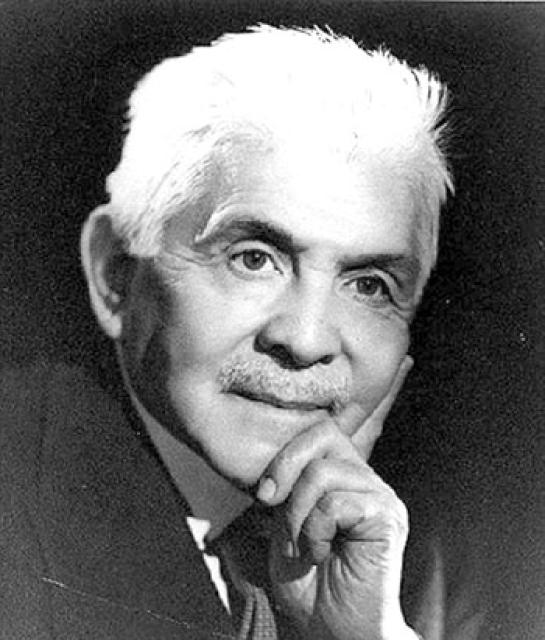
Julian Carrillo
 Mexico
- Early Life and Musical Education
- Success in Europe and Return to Mexico
- Groundbreaking Innovations and International Acclaim
- Legacy of Musical Innovations
Early Life and Musical Education
Julián Carrillo was born in Ahualulco, Mexico, into a peasant family of indigenous descent. Despite financial constraints, he developed a passion for music at an early age, singing in his town's church choir and studying under its director. After composing a successful mass for the choir, he received a scholarship to attend the National Conservatory of Mexico.
In 1899, the country's leader, General Porfirio Díaz, became captivated by Carrillo's violin playing and sponsored his trip to Europe for further studies. He enrolled at the Leipzig Conservatory, where he studied violin with Hans Becker and composition with Salomon Jadassohn.
Success in Europe and Return to Mexico
Carrillo excelled as a violinist, playing in both the conservatory's orchestra and the Gewandhaus Orchestra. In Leipzig, he composed several notable works, including his String Sextet in G Major (1900) and his First Symphony in D Major (1901), which he conducted with the conservatory's orchestra.
After continuing his violin studies at the Ghent Conservatory, Carrillo returned to Mexico in 1904. He taught various subjects at the National Conservatory, eventually becoming its director in 1913. From 1918 to 1924, he led the National Orchestra of Mexico.
Groundbreaking Innovations and International Acclaim
In 1925, Carrillo's works were premiered in the United States by the Philadelphia Orchestra under Leopold Stokowski. The performance of his Sonata-Fantasia received rave reviews, with Olga Samaroff declaring that it "opened a new era in the world of Western music."
Carrillo's innovative approach to music, particularly his exploration of microtonal scales and "sonido 13," gained international attention and recognition. He toured extensively and conducted his own works in Europe and the Americas.
Legacy of Musical Innovations
Julián Carrillo's groundbreaking contributions to music had a lasting impact on the field. His experiments with microtones and mathematical intervals paved the way for future developments in electronic and avant-garde music. He is widely considered one of the most important composers of the early 20th century, and his legacy continues to inspire musicians and scholars today.




