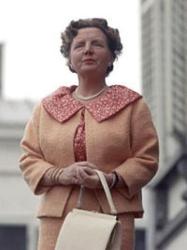
Juliana
 Netherlands
Biography of Queen Juliana of the Netherlands
Queen Juliana of the Netherlands was born in The Hague, in the family of Queen Wilhelmina of the Netherlands and Count Henry of Mecklenburg-Schwerin. She spent her childhood in Apeldoorn and The Hague. At the advice of prominent educator Jan Ligthart, a small school was formed in Noordeinde Palace, where Juliana and a few other children of her age studied. Due to Danish laws, Juliana had to be prepared to inherit the throne by the age of 18, which meant she had to study faster than her peers. After completing a basic education course, she continued her studies with private tutors.
On April 30, 1927, Juliana celebrated her 18th birthday and the same year she entered the University of Leiden, where she studied sociology, law, history of religions, constitutional law, international law, and more.
In the 1930s, Queen Wilhelmina began searching for a suitable match for her daughter. The House of Orange was known for its strict religious beliefs, so finding a Protestant prince who could meet the queen mother's expectations was not easy. Juliana met Bernhard of Lippe-Biesterfeld, a young German aristocrat, at the Winter Olympics in Bavaria. They soon became engaged, and their love endured the test of time, the long separation during the war, and various intrigues.
During the rise of the Nazis in Europe, tensions grew after Adolf Hitler commented on Juliana and Bernhard's marriage, suggesting it symbolized an alliance between Germany and the Netherlands. Queen Wilhelmina quickly issued a denial, but this did not help repair Bernhard's reputation among the Dutch people. When the Netherlands was occupied by the Germans, Juliana and Bernhard decided to leave the country with their two daughters and sought refuge in the United Kingdom and later in Ottawa, Canada. Juliana enjoyed her time in Canada, as the people were friendly and welcoming, and her royal background went unnoticed. The birth of their third child, Princess Margriet, took place in Canada, and the governor-general even declared the birthing room to be temporarily Dutch territory to ensure Margriet's right to the throne.
Juliana returned to the Netherlands on August 2, 1945. Soon, Bernhard realized that their time in Canada had influenced their children's behavior. He and Juliana often disagreed on their upbringing, with Juliana believing that the traditional, refined monarchy had become outdated and that the young royal offspring should interact more with ordinary citizens.
In 1948, Juliana assumed full royal duties. She had a unique approach to her role as queen, often attending events in casual attire and regularly engaging with the public. She also faced challenges, as she continued to listen closely to Greet Hofmans, a faith healer whose influence damaged the reputation of the House of Orange.
Juliana abdicated the throne on April 30, 1980, at the age of 71, and her eldest daughter succeeded her. She remained active in various public activities for some time. Unfortunately, her health declined in the mid-1990s, and she began to suffer from dementia. Queen Juliana passed away on March 20, 2004, peacefully in her sleep.