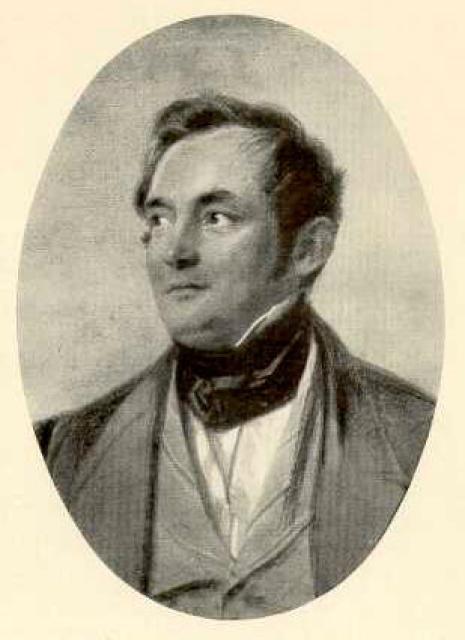
Karl Adolph von Basedow
 Germany
Karl Adolph von Basedow
Karl Adolph von Basedow, a German physician and scientist, was born in 1799. His significant contributions to the field of medicine have earned him a place in medical history.
Early Life and Education
Born in Dessau, Germany, Basedow pursued a medical degree at the University of Halle. After graduating, he furthered his studies in Paris, specializing in surgery.
Career and Discovery
In 1822, Basedow began working as a district physician in Merseburg, Germany. It was during his time there that he made his groundbreaking discovery. He observed 4 patients presenting with a unique combination of symptoms, which he later described as the Merseburg triad: goiter, exophthalmos (bulging eyes), and palpitations. This observation laid the foundation for understanding a disorder known as Basedow's disease.
Basedow's Disease
Basedow's disease is an autoimmune condition that affects the thyroid gland. It occurs when the body produces excessive thyroid hormones, causing the eyes to protrude, rapid heart rate, and other symptoms. Basedow's work in describing this condition provided a crucial insight into thyroid-related disorders.
Legacy
The eponymous "Basedow's disease" is a testament to the physician's significant contribution to medicine. His work helped advance the understanding and treatment of thyroid disorders, improving the lives of countless patients. Karl Adolph von Basedow's legacy continues to inspire medical professionals and scientists working in the field of endocrinology.