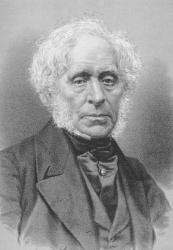
Philipp Jolly
 Germany
- Early Life and Education
- Academic Career
- Osmosis
- Acceleration of Free Fall
- Contributions to Physics
- Influence on Max Planck
- Later Years and Legacy
Early Life and Education
Philipp von Jolly was born on September 26, 1809, in Mannheim, Germany, as the son of Ludwig Jolly, the mayor of the city. His family originated from France, and his father was an immigrant named Louis Jolly. Jolly had two brothers, Julius and Ludwig, and three sons: Ludwig, Friedrich, and Julius.
In 1832, Jolly began his academic career as a private lecturer at Heidelberg University. In 1847, he was appointed professor at the same university.
Academic Career
In 1854, Jolly moved to Munich University, where he succeeded Georg Simon Ohm as the chair of the physics department. He made significant contributions to experimental physics, particularly in the areas of osmosis and the acceleration of free fall.
Osmosis
Jolly was the first to define the concept of the osmotic equivalent in his work titled "Experimentale Untersuchungen über Endosmose" (1849). This concept became the foundation for understanding the movement of water across semipermeable membranes.
Acceleration of Free Fall
In 1878, Jolly published his experiments on using a weighing scale to measure the force of gravity and the mean density of the Earth. The results of his experiments were published in "Wied. Ann. d. Ph."
Contributions to Physics
Jolly's work played a crucial role in the development of physics. His experiments on osmosis paved the way for further research in the field of physical chemistry. His investigations into the acceleration of free fall contributed to our understanding of Earth's gravitational field.
Influence on Max Planck
One of Jolly's most notable students was Max Planck. In 1878, Jolly famously advised Planck to abandon his studies in physics, stating that "in this field almost everything is already discovered, and all that remains is to fill a few unimportant gaps." However, Planck persisted and went on to develop the theory of quantum physics.
Later Years and Legacy
Jolly retired from teaching in 1884 and spent his remaining years in Munich. He passed away on December 24, 1884. His contributions to physics continue to be recognized and influential in the field.