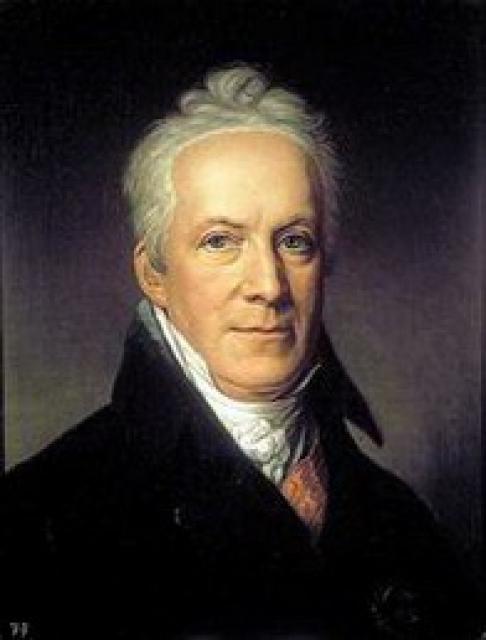
Karl August von Hardenberg
 Germany
- Karl August von Hardenberg: Prussian Statesman and Reformer
- Minister of Foreign Affairs and Liberal Reforms
- State Chancellor
- Civil Rights and the Vienna Congress
- Post-War Policies and Legacy
Karl August von Hardenberg: Prussian Statesman and Reformer
Early Life and CareerKarl August von Hardenberg was born into an aristocratic family in 1750. He held various government positions in the Prussian administration, including managing the Margraviates of Ansbach and Bayreuth in southern Germany.
Minister of Foreign Affairs and Liberal Reforms
In 1804, Hardenberg became Prussian Minister of Foreign Affairs. Following Prussia's defeat in the Napoleonic Wars in 1807, he urged King Frederick William III to implement liberal-democratic reforms.
State Chancellor
In 1810, Hardenberg was appointed State Chancellor of Prussia. He continued the reforms initiated by his predecessor, von Stein. In 1811, he introduced freedom of trade and commerce and abolished guilds. He also partially abolished serfdom and allowed peasants to redeem feudal obligations.
Civil Rights and the Vienna Congress
In 1812, Hardenberg guaranteed civil rights for Jews in Prussia. He played an active role in the Congress of Vienna (1814-1815) and the establishment of the "Holy Alliance."
Post-War Policies and Legacy
After the wars, Hardenberg's government allied itself with conservative Prussian landowners (junkers) domestically and with the monarchies of Austria and Russia internationally. His reforms helped to modernize Prussia and laid the foundation for its future economic and political development. Hardenberg died in 1822, leaving a lasting legacy as one of Prussia's greatest statesmen.