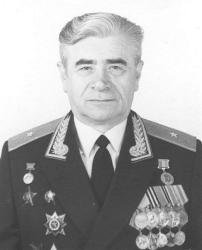
Karl Baggovut
 Russia
- Early Life and Military Career
- First Russo-Turkish War and Resignation
- Second Polish War and Return to Active Duty
- Warsaw Uprising and Subsequent Campaigns
- Retirement and Return Under Tsar Alexander I
- Patriotic War of 1812 and Death
Early Life and Military Career
Born in Russia, Baggovut joined the service of the Margrave of Ansbach at the age of 17. In 1779, he enlisted in the Russian army as a sub-lieutenant in the Tobolsk Infantry Regiment. He was subsequently transferred to the Dnieper Regiment in 1781, where he participated in suppressing the Crimean Tatars.
First Russo-Turkish War and Resignation
At the outbreak of the Second Russo-Turkish War in 1787, Baggovut was transferred to the Siberian Grenadier Regiment. He fought in the defeat of the Turks at the Salcha River and the capture of Bender Fortress. Due to ill health, he was forced to resign from service in 1790 with the rank of premier-major.
Second Polish War and Return to Active Duty
In 1792, upon learning of the outbreak of hostilities in Poland, Baggovut returned to the army as a volunteer. His bravery and leadership in various engagements led to his reinstatement in the Siberian Grenadier Regiment.
Warsaw Uprising and Subsequent Campaigns
In 1794, during the Warsaw Uprising, Baggovut played a crucial role in quelling the rebellion. He gathered a group of loyalists and fought his way through the Polish crowds. He also participated in the Battle of Maciejowice and the storming of Praga.
Retirement and Return Under Tsar Alexander I
In 1800, Baggovut retired from service as a general-major. However, upon Tsar Alexander I's accession to the throne, he was reinstated on November 5, 1800, and appointed chief of the 4th Jaeger Regiment.
Patriotic War of 1812 and Death
During the Napoleonic invasion of Russia in 1812, Baggovut commanded the 2nd Infantry Corps in Barclay de Tolly's army. He earned the Order of St. Alexander Nevsky for his role in the Battle of Borodino. However, he was killed by an enemy cannonball at the outset of the outflanking maneuver during the Battle of Tarutino on October 18, 1812.