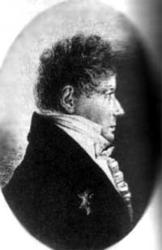
Karl Friedrich Kubeck
 Austria
- From provincial origins to imperial service
- Banking, railways, and the telegraph
- Revolution and the post-1848 order
- Final years and legacy
Karl Friedrich von Kübeck was an Austrian statesman and financial administrator whose career spanned the Metternich era and the revolutions of 1848. A skilled bureaucrat, he helped build institutions that modernized the Habsburg Empire’s economy, including the National Bank, state railways, and the telegraph network. He also became a close adviser to Emperor Franz Joseph and helped shape the authoritarian system that followed the revolutions. He was born in Iglau, Moravia, on October 28, 1780, and died near Vienna on September 11, 1855.
From provincial origins to imperial service
Kübeck came from a modest family; his father was a tailor. He studied law and political science at the universities of Prague and Vienna, then entered government service in 1800. His ability and diligence brought rapid advancement through the imperial administration. In 1816, he was ennobled as a knight, and in 1825 he became a baron.
He worked on financial policy and state administration, rising to membership of the State and Conference Council in 1821. He accompanied Emperor Francis I at major diplomatic gatherings, including the congresses of Laibach and Verona. By 1839 he was leading the General Accounting Directorate, and the following year he became president of the Court Chamber, the empire’s central treasury administration.
Banking, railways, and the telegraph
Kübeck’s influence extended beyond the treasury. He helped advance the establishment of the Austrian National Bank, which opened in 1818 and was intended to stabilize the currency and strengthen public finance. He argued that transport and communication networks were essential to the power and prosperity of the state.
In 1841, he pushed for the development of state railways and the construction of major lines linking Vienna with other parts of the empire. Under his leadership, plans for the railway network took shape, and the state telegraph system was launched in 1846. These initiatives helped lay the groundwork for a more connected imperial economy.
Revolution and the post-1848 order
The revolutions of 1848 upended the system in which Kübeck had risen. He briefly served as finance minister in the first revolutionary government, then withdrew from active government during the upheaval. After the revolution was defeated, he returned to public life and headed the provisional Central Commission in Frankfurt in 1849.
Kübeck became president of the newly established Reichsrat in 1850 and a close adviser to the young Emperor Franz Joseph. Although he had earlier supported some administrative reforms, he increasingly favored strong monarchical authority. He helped shape the neo-absolutist order and supported the suspension of the 1849 constitution in 1851. His legacy therefore combines state-building and modernization with resistance to constitutional and democratic change.
Final years and legacy
Kübeck remained influential in government until his death from cholera in 1855. His bureaucratic rise from a provincial, middle-class background reflected the growing importance of trained civil servants in the Habsburg state. The banking, transport, and communications infrastructure he helped promote left a lasting mark, even as his political outlook tied him to the empire’s effort to restore centralized authority after revolution.