Karl Haushofer
 Germany
Biography of Karl Haushofer
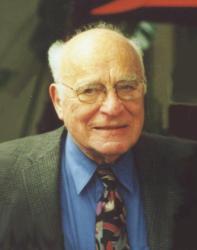
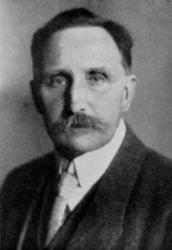
Karl Haushofer was a German geographer and sociologist, and the founder of the German school of geopolitics. He graduated from the Bavarian Military Academy and served in the military until the end of World War I, teaching military sciences. In 1908, he served as a military advisor to the Japanese command and visited India, Korea, Manchuria, and Russia, where he presented his views on Japan in his doctoral dissertation.
There are rumors that during his trip to the East, Haushofer allegedly had contact with Tibetan lamas, became a disciple of Gurdjieff, or joined the Thule Society, but there is no evidence to support these claims. Haushofer believed that Germany's defeat in the war was due to the geopolitical ignorance of its leadership. He argued that Germany, as a landlocked country, should seek alliances with maritime powers like Italy and Japan who could compensate for its insufficient navy in case of conflict with the Anglo-Saxon world.
Haushofer was so passionate about geopolitics that he began teaching geography at the University of Munich. After his student Rudolf Hess came to power in 1933, Haushofer was appointed professor. Although he participated in the negotiations that led to the alliance between the Third Reich and Japan, he generally distanced himself from the Nazi leadership. He considered Hitler to be intellectually deficient and blamed Joachim von Ribbentrop for distorting his geopolitical ideas.
After the July 20 plot, Haushofer's son Albrecht was executed, and his family faced persecution. The aged professor himself spent eight months in the Dachau concentration camp. Although he was not officially charged after the fall of the Nazi regime, Haushofer felt responsible for the crimes committed by the Nazis and committed seppuku in May 1946, while his wife took poison.
Contributions and Ideologies
Haushofer was the founder of the German Institute of Geopolitics (1922) and the founding editor of the journal "Geopolitik," which was published from 1924 to 1944 and later renamed "Zeitschrift fur Geopolitik." His views were influenced by social Darwinism and American imperialist theorists. The foundation of Haushofer's ideas was the Malthusian concept of "living space," which he believed every state should strive to expand. From this concept, he derived the necessity of economic self-sufficiency (autarky), cultural expansion, and the absorption of smaller states that destabilized international relations by being unable to conduct independent foreign policies.
Some of these concepts were adopted by Nazi theorists. Although Haushofer provided literature to Hess and Hitler during their imprisonment after the failed Beer Hall Putsch, he denied that his own views influenced Hitler's writing in "Mein Kampf."
Haushofer developed a particular variant of Eurasianism - the military-geopolitical doctrine of the "Continental Block" (Kontinentalblocke), which aimed to create an eastern alternative and counterbalance to the Western Anglo-Saxon world (i.e., the British Empire and the United States). However, this doctrine was distorted and manifested in the Axis Powers. In his famous article "Continental Block," Haushofer wrote, "Eurasia cannot be suffocated as long as the two largest nations - Germans and Russians - strive to avoid conflicts like the Crimean War or 1914: this is an axiom of European politics."