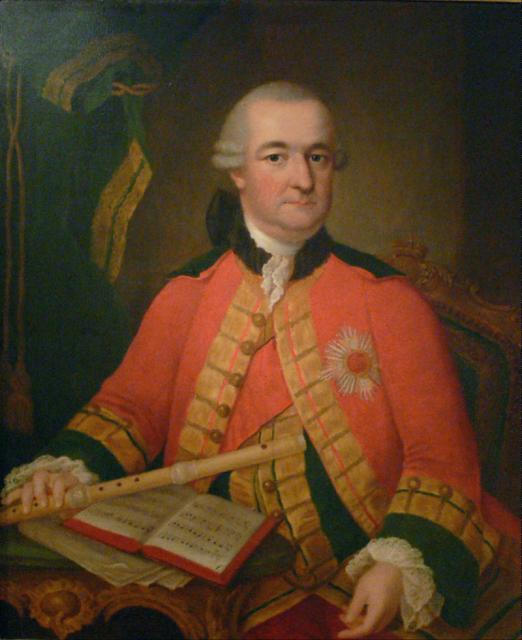
Karl IV Theodor
 Germany
- Carl Theodor: Enlightened Ruler and Elector of Bavaria
- Elector of the Palatinate
- Enlightenment Patron
- Palace Builder
- Elector of Bavaria
- Marriages and Children
- Legacy
Carl Theodor: Enlightened Ruler and Elector of Bavaria
Early Life and SuccessionBorn into the noble family of Palatinate-Sulzbach, Carl Theodor inherited the Margraviate of Bergen-op-Zoom at age 4 after the death of his mother. Five years later, his father's passing brought him the title of Count Palatine of Sulzbach.
Elector of the Palatinate
In 1742, the death of Charles III Philip, the last of the Palatinate-Neuburg line, opened the door for Carl Theodor to become the Elector of the Palatinate. As Carl IV, he ascended to the throne, bringing with him the titles of Duke of Jülich and Berg.
Enlightenment Patron
Carl Theodor was a renowned enlightened monarch. He dedicated himself to transforming Mannheim into a European cultural hub. He established academies for science and the arts, patronized court musicians, and generously supported philosophers like Voltaire.
Palace Builder
As Elector, Carl Theodor commissioned the opulent Benrath Palace, a testament to his architectural tastes, intended as a residence during his visits to Jülich-Berg.
Elector of Bavaria
In 1777, with the passing of Maximilian III Joseph, the last elector of Bavaria from the Bavarian line, Carl Theodor inherited Bavaria, becoming known as Charles II. His succession sparked the "Potato War," a conflict over territorial claims.
Marriages and Children
Carl IV Theodor's first marriage in 1742 was to Elisabeth Augusta of Sulzbach. Their son Franz Ludwig Joseph died shortly after birth in 1761. His second marriage in 1795 to Maria Leopoldina of Austria-Este produced no children.
Legacy
Carl Theodor's reign left a lasting impact on the arts and culture of Germany. His patronage of the sciences, the arts, and education established Mannheim as a beacon of Enlightenment. He died in 1799 and was buried in the Theatinerkirche in Munich.


