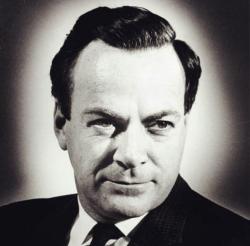
Karl Knoblauch
 Germany
- Hermann Knoblauch
- Early Life and Career
- Research on Radiant Heat
- Magnetic Properties of Crystals
- Later Life and Achievements
Hermann Knoblauch
Hermann Knoblauch was a German physicist known for his seminal contributions to the study of radiant heat.
Early Life and Career
Born in Berlin in 1820, Hermann Knoblauch completed his university studies in 1847. He initially worked as a private lecturer in physics in Berlin for two years before being appointed as an extraordinary professor at the University of Marburg in 1849. In 1853, he moved to the University of Halle as a full professor.
Research on Radiant Heat
Knoblauch's primary research focus was on the phenomena of radiant heat. Together with the Italian physicist Macedonio Melloni, he established the foundational principles of this field. His investigations illuminated the emission, absorption, and reflection of radiant heat, advancing the understanding of thermal radiation.
Magnetic Properties of Crystals
In collaboration with the English physicist John Tyndall, Knoblauch embarked on a study of the magnetic properties of crystals. Their research uncovered the complex relationship between the crystal structure and its magnetic susceptibility, providing valuable insights into the behavior of materials under magnetic fields.
Later Life and Achievements
In 1878, Knoblauch became president of the Royal Saxon Leopoldinian Academy of German Naturalists. This prestigious appointment recognized his significant contributions to the field of physics. He continued to conduct research and publish articles until his death in 1895.
Throughout his career, Hermann Knoblauch played a pivotal role in the development of physics. His pioneering work on radiant heat and magnetic properties奠定基础 for further advancements in these fields and deepened our understanding of the fundamental properties of matter.