Karlis Goppers
- Early Life and Military Career
- World War I
- Latvian Independence and Civil War
- Later Career in Latvia
- Arrest and Execution
- Awards and Legacy
- Order of St. George (3rd and 4th degrees)
Early Life and Military Career
Karlis Hopper was born into a farming family in Maskatu, Latvia, on April 2, 1876. He received his primary education at home before enlisting in the Imperial Russian Army as a volunteer second class on February 17, 1893. After completing his basic training, he was promoted to junior non-commissioned officer on July 3, 1894.
Hopper subsequently attended the Vilna Military School and graduated with distinction in 1896. He was commissioned as a second lieutenant and assigned to the 97th Infantry Regiment in Dvinsk. He later served in the 189th Infantry Reserve Regiment and the 183rd Infantry Regiment.
World War I
During World War I, Hopper commanded the 7th Latgalian Bausk Rifle Regiment from November 1916. He was promoted to colonel in March 1916. In February 1917, he became commander of the 1st Latgalian Rifle Brigade.
Hopper was a recipient of numerous decorations for his bravery in battle, including the Order of St. George (3rd and 4th degrees) and the Order of St. George's Weapon. He was severely wounded three times during the war.
Latvian Independence and Civil War
In July 1917, Hopper co-founded the National Union of Latvian Warriors, an organization that promoted the creation of a Latvian military force. He played a key role in the Kornilov Affair, an attempted coup against the Bolsheviks in August 1917.
After the Bolshevik takeover, Hopper joined the anti-Bolshevik resistance movement. He served as chief quartermaster of the Directory's army in Ufa. In February 1919, he became a major general and commanded the 21st Yaik Rifle Division.
Later Career in Latvia
After the defeat of the White movement, Hopper returned to Latvia. In 1920, he served as commander of the Latvian Imants Regiment. From 1930 to 1934, he was head of the Vidzeme Division. He retired from military service in 1934.
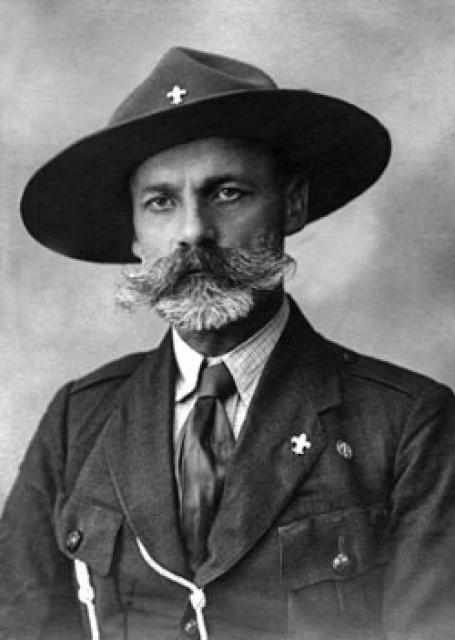
Hopper was an active member of the Latvian Riflemen's Association and the scout movement.
Arrest and Execution
Following the Soviet occupation of Latvia in 1940, Hopper was arrested by the NKVD. He was convicted of "anti-Soviet activities" and executed on September 30, 1940. His remains were later identified and reburied in the Riga Brethren Cemetery in 1944.
Awards and Legacy
Hopper received numerous awards throughout his military career, including:
Order of St. George (3rd and 4th degrees)
Order of St. George's WeaponOrder of St. Vladimir (3rd and 4th degrees with swords and bow)
Order of St. Anna (2nd and 3rd degrees with swords and bow)
Order of St. Stanislaus (2nd and 3rd degrees)
Latvian War Order of Lāčplēsis (2nd and 3rd degrees)
Order of the Three Stars (2nd and 3rd degrees)
French Legion of Honor (3rd degree)
Czechoslovakian War Cross
Belgian Order of Leopold II
Lithuanian Order of Gediminas (2nd degree)
Finnish Order of the White Rose (2nd degree)
Serbian Order of the Star of Karađorđe (3rd degree)
Swedish Order of the Sword (2nd degree)
Estonian Order of the Eagle Cross (2nd degree)
Hopper is remembered as a courageous and dedicated soldier who fought for both Latvia and Russia. He remains a respected figure in Latvian military history.