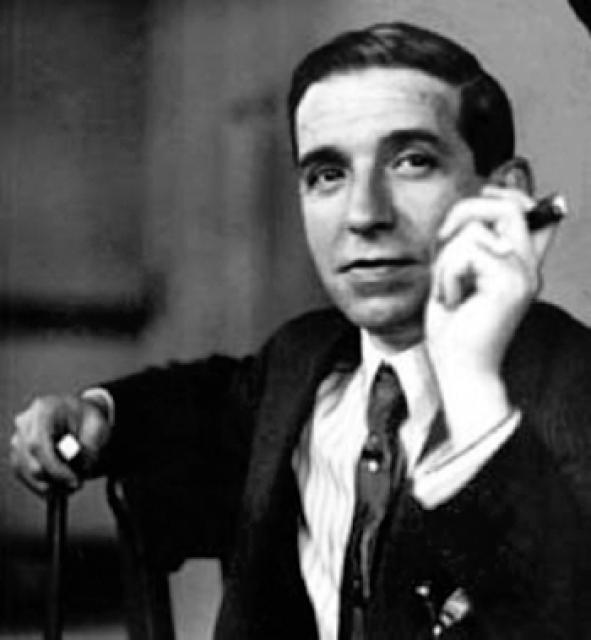
Karlo Pontsi
 Italy
- Early Life and Arrival in America
- The Postal Coupon Promise
- Boston’s “Financial Wizard”
- Prison, Deportation and Final Years
- A Name That Became a Warning
Early Life and Arrival in America
Charles Ponzi was born Carlo Pietro Giovanni Guglielmo Tebaldo Ponzi on 3 March 1882 in Lugo, Italy. He grew up in a family that had once enjoyed greater means, and studied for a time at the University of Rome. By his own later account, however, he spent more than he studied. In 1903, at 21, he sailed for the United States, arriving in Boston with little money and grand hopes.
The promised fortune did not come quickly. He worked a succession of jobs, including restaurant work, sign painting and clerical duties, moving around the eastern United States before returning to Boston. In 1918 he married Rose Gnecco. A year later, after a brief period working as a clerk and trying unsuccessfully to establish a business journal, he began promoting an investment plan that would make him famous.
The Postal Coupon Promise
The idea began with an International Reply Coupon, a postal voucher used to prepay the cost of a reply from another country. Exchange rates had shifted during and after the First World War, and Ponzi claimed that coupons bought in countries with weaker currencies could be redeemed for more valuable postage in the United States. He founded the Securities Exchange Company and promised investors returns that sounded irresistible: 50 percent in 90 days, later shortened to 45 days.
The theory had a fragment of plausibility, but the scale he advertised could not work. There were not enough coupons available, and the logistics of buying and redeeming them in huge quantities made the proposed profits impossible. Rather than earn money through a real investment, Ponzi used funds from later investors to pay earlier ones. Those early payments appeared to confirm his claims, so many customers reinvested and brought friends and relatives into the venture.
Boston’s “Financial Wizard”
By the summer of 1920, crowds were lining up at his office in Boston. Thousands of people—from working families to professionals and public figures—handed over savings, while Ponzi enjoyed the spectacle of sudden wealth. He used a polished image and an optimistic manner to build confidence, portraying himself as a clever financier who had discovered a secret others could not understand.
The Boston Post first publicized his operation in July 1920, and then began investigating it. Doubts grew when journalists uncovered his earlier criminal record: he had served time in Canada for check forgery and in the United States for helping bring Italian immigrants across the border illegally. Postal officials and financial authorities examined the business. As investors rushed to withdraw their money, the structure collapsed. The company had taken in millions of dollars, but its assets fell far short of what it owed; many investors recovered only part of their savings.
Prison, Deportation and Final Years
Ponzi was convicted of mail fraud in federal court and later faced state fraud charges in Massachusetts. He served several years in prison, briefly left custody on parole, and attempted to raise new money in Florida by selling swampland under the name “Charpon.” After a further fraud conviction, he fled, was captured in New Orleans and returned to Massachusetts to complete his sentence.
Released in 1934, Ponzi was deported to Italy because he had never become a U.S. citizen. Rose remained in Boston; the marriage ended in divorce after he left. Accounts of his later European years differ, but he eventually moved to Brazil and worked for an airline operating between Italy and South America. When the airline closed during the Second World War, he struggled to find stable work. His eyesight deteriorated, and a stroke left him partially paralyzed. He died in a charity hospital in Rio de Janeiro on 18 January 1949, with little money to his name.
A Name That Became a Warning
Ponzi’s story is a study in how confidence can be manufactured: a plausible-sounding mechanism, unusually generous returns, early payouts and the visible excitement of a growing crowd. His operation was not the first fraud of its kind, but the scale and publicity of the 1920 collapse permanently attached his name to the method. A Ponzi scheme is a fraud in which returns to earlier participants are paid from money supplied by newer ones, rather than from genuine profits.
The Boston scheme made its creator briefly rich and widely admired by people who hoped his promise was real. Its collapse left investors hurt, banks weakened and a cautionary example that has outlasted the man himself. Today the name is used across the world as shorthand for an investment operation that depends on fresh money to conceal the absence of real earnings.