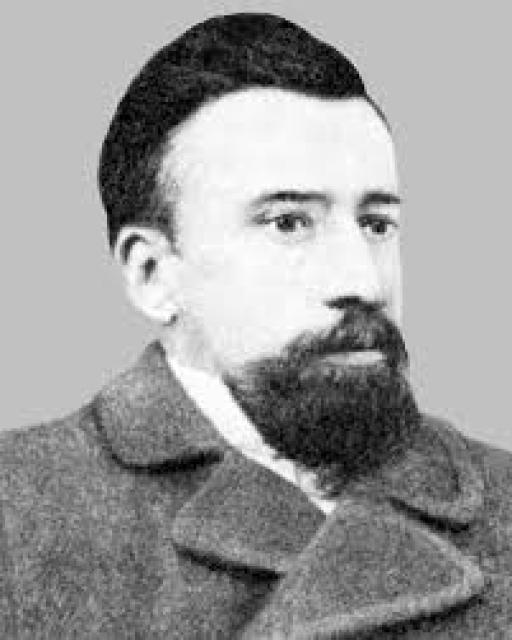
Karus Kaganets
 Belarus
- Early Life and Education
- Literary Career
- Collaboration with "Nasha Niva"
- Dramatic Contributions
- Legacy and Impact
Early Life and Education
Yankupa Kupalawas born on July 7, 1882, in the town of Tovolsk in present-day Siberia. His father, Karlo Kastrowicki, had been exiled to Siberia after participating in the 1863 Polish uprising. In 1874, the family returned to their homeland in the Minsk province.
Yankupa Kupala completed his early education at the Minsk city school, and later attended the Moscow School of Painting, Sculpture, and Architecture.
Literary Career
Kupala's literary journey began in 1893. In 1902-1903, he played a significant role in the establishment of the Belarusian Socialist Hromada (BSH).
In 1905 and 1910, Kupala was arrested by the authorities for his political activities. During his second arrest in 1910, he was imprisoned in Minsk prison alongside another Belarusian writer, Yakub Kolas.
Collaboration with "Nasha Niva"
Kupala maintained a close association with "Nasha Niva," the primary newspaper of the Belarusian national and cultural movement. In 1906, he anonymously published "Belarusian Primer," a groundbreaking textbook for literacy in the Belarusian language.
Dramatic Contributions
Kupala also made significant contributions to Belarusian drama. His play "Modny Shlyakhtyuk," which he wrote while imprisoned, became one of the first works of Belarusian theater. The play achieved immense popularity and was performed countless times on stage.
Legacy and Impact
Yankupa Kupala's works had a profound impact on Belarusian culture and national identity. His poetry and writings inspired generations of Belarusians to embrace their heritage and strive for independence. He is widely regarded as one of the most important figures in Belarusian literature and is celebrated as the national poet of Belarus.


