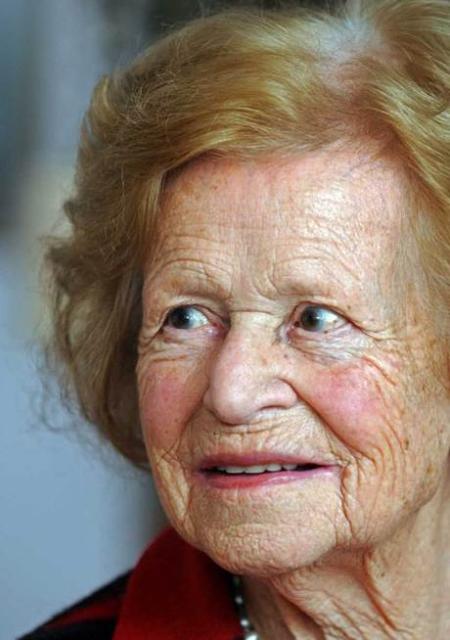
Kathleen Mary Ollerenshaw
 Great Britain
- Biography of Kathleen Mary Ollerenshaw
- Passion for Mathematics and Overcoming Challenges
- Education and Academic Achievements
- Marriage and Family
- Political Career and Contributions
- Mathematical Contributions and Astronomy
- Other Interests and Honors
Biography of Kathleen Mary Ollerenshaw
Kathleen Mary Ollerenshaw was a British mathematician and political figure. She was born on October 1, 1912, in Withington, Manchester, the younger of two daughters of Charles and Mary Timpson.
Passion for Mathematics and Overcoming Challenges
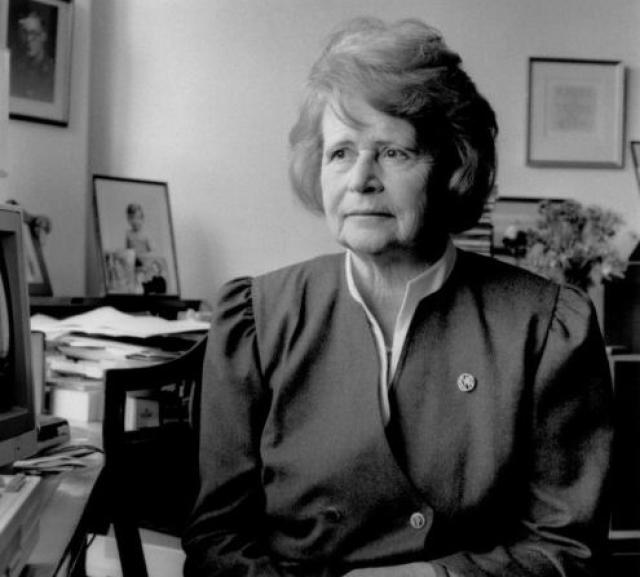
At the age of 8, Ollerenshaw became deaf after an infection. Despite this, she developed a love for solving mathematical problems and found solace in the subject. Since there were no hearing aids at the time, she had to learn to lip-read.
Education and Academic Achievements
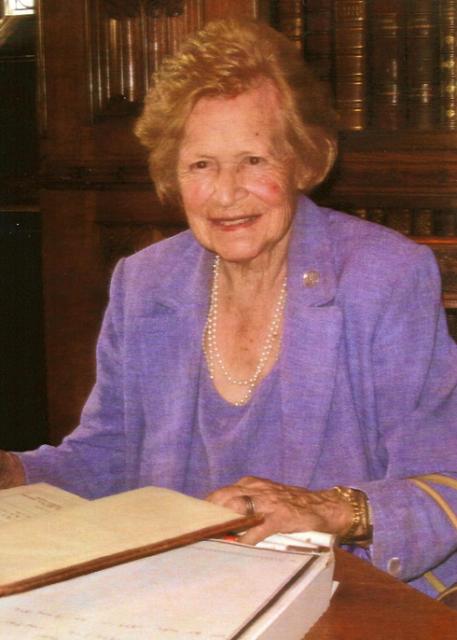
When she turned 19, Ollerenshaw had the opportunity to study mathematics at Somerville College, Oxford. Although she admitted to being lucky in her exams, she managed to obtain her doctorate in 1945, specializing in number theory under the guidance of mathematician Theo Chaundy. She wrote five original scientific papers, which were sufficient to earn her a doctorate without a formal dissertation.
Marriage and Family
While still a student, Ollerenshaw got engaged to Colonel Robert Ollerenshaw, a renowned military surgeon and pioneer in medical illustration. They married in September 1939 and had two children, Charles and Florence.
Political Career and Contributions
After World War II, the Ollerenshaw family moved to Manchester, where Kathleen worked part-time as a mathematics lecturer at Manchester University. She continued her research on critical lattices. Ollerenshaw served as a member of the Rusholme district council for 26 years, representing the Conservative Party. She became the Lord Mayor of Manchester in 1975-1976 and played a key role in establishing the Royal Northern College of Music. In recognition of her contributions, Ollerenshaw was granted honorary citizenship of Manchester. She later served as an education advisor to Margaret Thatcher's administration in the 1980s.
Mathematical Contributions and Astronomy
Ollerenshaw published at least 26 mathematical papers throughout her career. Her most famous work involved solving the highly challenging problem of pandiagonal magic squares, which she published in a book at the age of 85. The annual public lecture series at the University of Manchester's mathematics school is named after her. Ollerenshaw was also an avid amateur astronomer and donated her telescope to Lancaster University, which now bears her name. She was an honorary member of the Manchester Astronomical Society and served as its vice-president for several years.
Other Interests and Honors
In her youth, Kathleen excelled in ice hockey and figure skating. She attended St Leonards School in St Andrews, Fife, and later served as the school's president from 1981 to 2003. Composer Sir Peter Maxwell Davies dedicated his String Quartet No. 9 from the 'Naxos Quartets' series to her.


