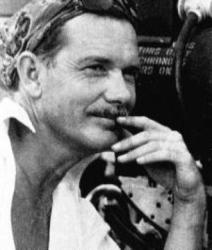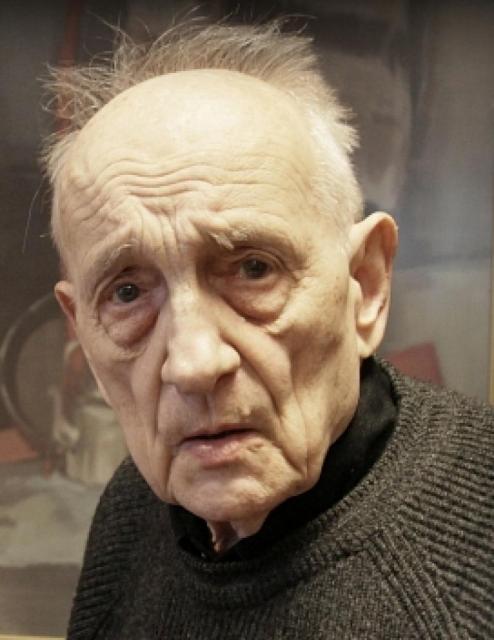
Kazimierz Karabasz
 Poland
- Early Life and Education
- "Black Series" and Social Criticism
- Influence of Italian Neorealism
- "The Musicians" and Critical Acclaim
- Focus on Ordinary Lives and Youth
- Recent Works
- Collaboration with Stanisław Niedbalski
Early Life and Education
Kazimierz Karabasz, a Polish film director and a prominent figure in Polish documentary filmmaking, was born on May 6, 1930, in Bydgoszcz, Poland. He graduated from the State Higher School of Film, Television, and Theater in Lodz in 1956, where he later taught.
"Black Series" and Social Criticism
Karabasz began his filmmaking career as part of the "Black Series" movement in Polish documentary filmmaking. This movement aimed to expose the "socialist realism" and official optimism imposed by the communist regime. In line with this approach, Karabasz created films such as "Where the Devil Says Good Night" (1956) and "People From Barren Lands" (1957), which depicted the harsh realities of everyday life in Poland.
Influence of Italian Neorealism
In the early 1960s, Karabasz's work was influenced by Italian Neorealism. Inspired by its observational style, he directed films such as "People on the Road" (1960) and "Railway Junction" (1961). These films eschewed narrative and instead captured the lives of ordinary people.
"The Musicians" and Critical Acclaim
"The Musicians" (1960) stands as a crowning achievement in Karabasz's career. It follows a group of tram drivers who form their own orchestra and spend their evenings rehearsing. The renowned Polish director Krzysztof Kieslowski, who was Karabasz's student at film school, included "The Musicians" among the ten best films he had ever seen.
Focus on Ordinary Lives and Youth
Karabasz developed a distinct style that centered on the lives of ordinary people, particularly young people grappling with their futures. His films explored both individual stories, such as in "One Year of Frank W." (1967) and "Christina M." (1973), and broader youth culture, as in "On the Edge" (1965).
Recent Works
Karabasz's later works include "Portrait in a Drop of Water" (1997) and "Meetings" (2004). "Portrait in a Drop of Water" is based on photographs of random passersby taken by the director himself.
Collaboration with Stanisław Niedbalski
Many of Karabasz's films were shot by cinematographer Stanisław Niedbalski, who collaborated with him extensively throughout his career.