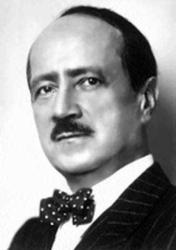
Kazimierz Wierzynsk
 Poland
- Kazimierz Wierzyński: A Prominent Polish Poet and Writer
- Early Life and Education
- Military Career and Activism
- Literary Career
- Wartime and Exile
- Post-War Writing
- Literary Legacy
Kazimierz Wierzyński: A Prominent Polish Poet and Writer
Born Kazimierz Wirstlein in 1914, the Polish poet and writer Kazimierz Wierzyński was a significant figure in the literary landscape of 20th-century Poland.
Early Life and Education
Wierzyński's family changed their surname to Wierzyński in 1912. He completed his secondary education in Stryj in 1912 and went on to study at the universities of Krakow and Vienna. His literary debut came in 1913 when a poem of his was published in a local newspaper in Drobogoz.
Military Career and Activism
During the First World War, Wierzyński joined the Polish Eastern Legion as a volunteer. After its dissolution, he was conscripted into the Austrian army and was held as a prisoner of war in Ryazan, Russia, from 1915 to 1918. Following his escape from captivity, he became involved in underground activities with the Polish Military Organization in Kiev.
Literary Career
In the autumn of 1918, Wierzyński moved to Warsaw, where he immersed himself in the city's vibrant literary scene. He participated in performances at the "Pod Picadorem" cabaret and became a founding member of the "Skamander" poetic group. His first collection of poems, "Wiosna i wino" (Spring and Wine), was published in 1919, bringing him critical acclaim.
Wartime and Exile
With the outbreak of the Second World War, Wierzyński was evacuated to Lviv with the editorial staff of the "Gazeta Polska" newspaper. He subsequently traveled through France, Portugal, and Brazil before arriving in the United States in 1941. There, he met and collaborated with Roman Jakobson, who wrote an influential essay on his poetry.
Post-War Writing
After the war, Wierzyński returned to Europe, settling first in Rome and later in London, where he died in 1991. His ashes were reburied in Poland in 1978. He continued to write prolifically in exile, publishing collections of poetry, essays, and short stories, including "Wolność tragiczna" (Tragic Freedom, 1936), "Ziemia-Wilczyca" (Earth-She-Wolf, 1941), and "Kufer na plecach" (Trunk on the Back, 1964).
Literary Legacy
Wierzyński's poetry is characterized by its lyrical beauty, its exploration of human nature and the complexities of reality, and its passionate patriotism. He was a prominent figure in the "Skamander" group, which promoted the use of everyday language in poetry and a focus on contemporary life. His work has been translated into numerous languages and continues to be widely read and admired.