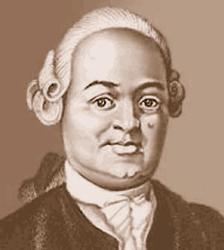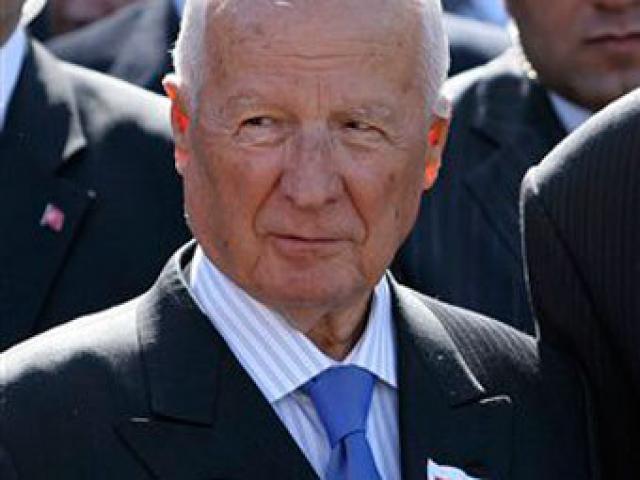
Kenan Evren
 Turkey
Biography of Kenan Evren
Kenan Evren was a Turkish military and political figure. He served as the head of the National Military Council and later became the president of Turkey. Evren, along with the former commander of the Turkish Air Force, Tahsin Sahinkaya, was charged with organizing the military coup of 1980. If found guilty, both Evren and Sahinkaya faced a potential life sentence without parole. Prior to this, participants in coups in Turkey were protected from prosecution by the constitution.
Evren, a general in the armed forces, led the third and most recent military coup in the Turkish Republic. Prior to him, power in the country had changed hands through military interventions in 1960 and 1971. The events of September 1980 were preceded by a significant socio-economic decline in the country and an escalation of violence between opposing political groups on the left and right. There is a version that suggests the military directly participated in the development of the conflict between socialists and nationalists, resulting in approximately five thousand casualties. This viewpoint was later confirmed by representatives of the ultranationalist movement "Grey Wolves," who claimed support from military forces. Officially, the military justified their takeover as necessary to stabilize the situation in the country.
On September 12, 1980, the National Military Council, led by Kenan Evren, announced the coup on national television. Many Turks welcomed the military's rise to power, as they hoped for stability. However, as noted by journalist Mehmet Ali Birand, who witnessed the events of the 1980s and was cited by The Wall Street Journal, public opinion soon changed drastically.
The generals declared martial law, banned political parties and trade unions, dissolved parliament and the government, and suspended the constitution. Activists from both left and right political movements were put on trial en masse. Hundreds of thousands of people ended up behind bars (according to Amnesty International, up to a million people), subjected to torture, and dozens were executed. Former Prime Ministers of Turkey, Bulent Ecevit and Suleyman Demirel, were among the political prisoners. One positive outcome of the coup, according to experts, was the stabilization of the national economy and Turkey's gradual integration into international markets.
In November 1982, a new constitution, initiated by the National Military Council, came into effect in Turkey, and Kenan Evren became the new president of the republic. Evren is considered a harsh politician who significantly restricted civil liberties in Turkey during his seven-year presidency, often compared to a Turkish version of Augusto Pinochet. The general himself referred to himself as a follower of Mustafa Kemal Ataturk, the "father of all Turks," who established the Turkish Republic in 1923 and implemented a series of radical reforms to create a Europeanized secular society in the country.
Despite calls from Erdogan's moderately Islamist government, which came to power in 2003, to amend the main state law and expand civil liberties, Evren's constitution is still in effect in Turkey. Another important aspect of Erdogan's domestic policy has been his fight against the military's entrenched habit of interfering in political affairs.
In March 2008, Turkish authorities announced the uncovering of a conspiracy involving politicians and military officials planning another coup in the country. According to the investigation, the Islamist government attempted to overthrow members of the closed organization "Ergenekon," which advocated for the preservation of secular traditions in Turkey. Opponents believe that this "witch hunt" was a response to the military's attempt in 2007 to ban the activities of the ruling "Justice and Development Party" through the courts. Despite the government's desire to bring the surviving participants of the 1980 military coup to trial, they were immune from prosecution until 2010 due to a constitutional article. Changes to the constitution could only be made through a referendum.
Significantly, the national referendum took place on September 12, the thirtieth anniversary of the military coup led by Kenan Evren. The main goal of Erdogan's referendum was to liberalize Turkey's main law. The amendments to the constitution were demanded by the European Union, of which Turkey has been an associate member since 1963. Another important outcome of the referendum was the removal of the constitutional ban on the prosecution of coup participants, allowing the victims of the Kenan Evren regime to take the military to civil court.
According to Recep Tayyip Erdogan, the trial of the surviving participants of the coup, Kenan Evren and Tahsin Sahinkaya, will be an important step in the history of the "new Turkey." Prosecutors are seeking life imprisonment without parole for Evren and Sahinkaya. Evren, currently living on the Mediterranean coast and passionate about painting, has stated in interviews that he has never regretted the coup and will take his own life if he is brought to trial.
According to some experts, high-profile trials of influential military figures in the "new Turkey" could further strengthen Erdogan's political position. As suggested by Mikhail Meyer, director of the Istanbul Studies Center, in an interview with "Lenta.ru," Erdogan, who has served as prime minister for three terms, may eventually make Turkey a presidential republic and become its president.