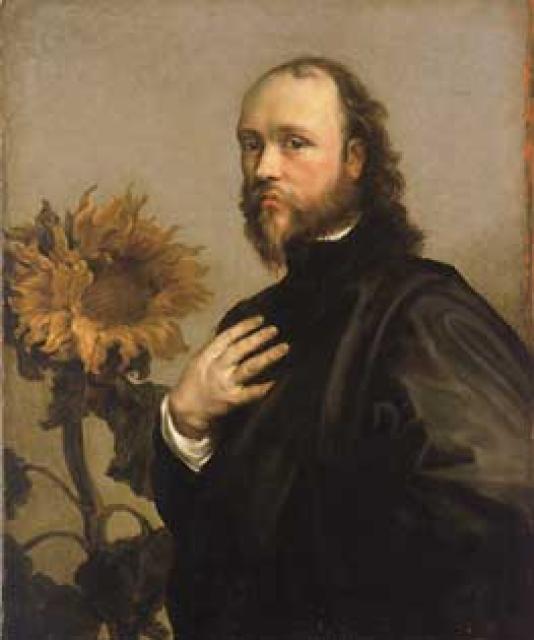
Kenelm Digby
 Great Britain
- Kenelm Digby: A Life Bridging Philosophy and Diplomacy
- Early Life and Education
- Continental Travels and Intellectual Awakening
- Diplomatic and Military Exploits
- Philosophical Legacy
- Scientific Pursuits and Wider Impact
- Later Years and Legacy
Kenelm Digby: A Life Bridging Philosophy and Diplomacy
Kenelm Digby, an English diplomat and philosopher, left an enduring legacy as a thinker who sought to reconcile the metaphysical realm of Aristotle with the natural world defined by Descartes. His complex philosophical explorations, rooted in these influential thinkers, often led him into critical reappraisals and nuanced contradictions.
Early Life and Education
Born into a noble family in Gayhurst, England, on July 11, 1603, Digby experienced a profound loss at a young age when his father was executed for an alleged plot against the King. In 1618, he matriculated at Oxford University, where he studied under the esteemed scholar Thomas Allen. Upon Allen's death, Digby inherited his mentor's invaluable library, filled with ancient and rare books.
Continental Travels and Intellectual Awakening
Embarking on extensive travels across Europe in 1620, Digby immersed himself in the political landscapes and social customs of major European capitals. His keen observation extended to the plight of common people in rural areas. During these travels, he had a passionate affair with Marie de' Medici and married Venetia Stanley in 1625. Around this time, Digby renounced his Catholic faith and converted to Anglicanism.
Diplomatic and Military Exploits
In 1628, Digby ventured into privateering, achieving some success in capturing Dutch and French vessels. In 1635, he departed for Paris, where he volunteered in the French army and remained until 1660. During this period, he formed influential connections with Marin Mersenne and Thomas Hobbes, who significantly shaped his intellectual development.
Philosophical Legacy
Throughout his life, Digby grappled with the philosophical concepts of Aristotle and Descartes, often offering critical re-examinations. His writings embraced a wide range of topics, including metaphysics, epistemology, and the nature of the soul. While deeply influenced by both thinkers, Digby did not hesitate to challenge Descartes' views on the mind, space, and substance.
Scientific Pursuits and Wider Impact
Beyond philosophy, Digby pursued interests in astronomy and alchemy, making notable contributions in these fields. His scientific treatises enjoyed wide popularity, with some being translated into foreign languages. Digby's intellectual legacy has inspired generations of thinkers, and his work continues to be studied and debated to this day.
Later Years and Legacy
Digby passed away on June 11, 1665, succumbing to a kidney ailment caused by kidney stones. Remembered as a brilliant and enigmatic mind, Kenelm Digby left an indelible mark on the intellectual and diplomatic landscape of his time. His writings and contributions continue to shape our understanding of philosophy, science, and the human condition.


