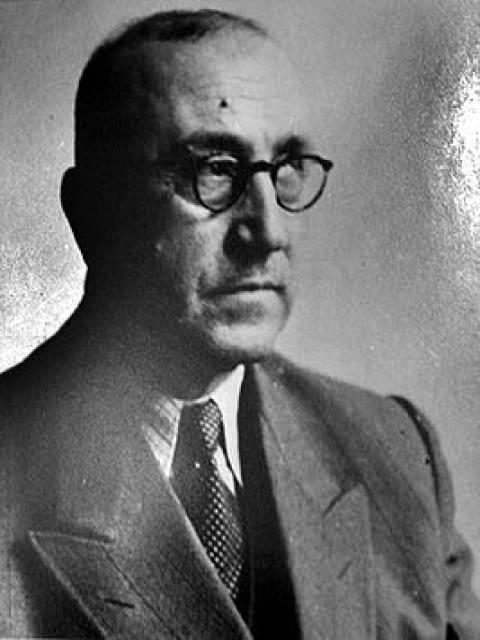
Kimon Georgiev
 Bulgaria
- Kimon Georgiev: Bulgarian Statesman and Military Leader
- Political Involvement and Military Coups
- Prime Ministership and Authoritarian Rule
- Economic Policies and Foreign Relations
- Opposition and Imprisonment
- Post-World War II Career
Kimon Georgiev: Bulgarian Statesman and Military Leader
Early Life and Military CareerKimon Georgiev was born in Pazardzhik, Bulgaria, in 1882. He graduated from the Military School in Sofia in 1902 and served in the Bulgarian army. During the Balkan Wars (1912-1913), he commanded a company and was promoted to captain. In World War I, he led a battalion and was severely wounded, losing an eye in the Battle of the Black River in 1916.
Political Involvement and Military Coups
After being discharged from military service in 1920, Georgiev became involved in politics. He was a co-founder of the Military Union and the People's Accord, which opposed the government of Alexander Stamboliyski. He participated in the coup of June 9, 1923, which overthrew Stamboliyski.
Prime Ministership and Authoritarian Rule
In 1934, Georgiev led a military coup that brought him to power as prime minister. His government established an authoritarian regime, dissolving parliament, banning political parties, and introducing censorship. It also carried out administrative reforms, reducing local autonomy and centralizing power.
Economic Policies and Foreign Relations
Economically, the Georgiev government strengthened state control and introduced monopolies on key industries. It supported social welfare programs and encouraged the development of cooperatives. In foreign policy, it pursued a pro-Western orientation and established diplomatic relations with the Soviet Union.
Opposition and Imprisonment
King Boris III initially opposed Georgiev's coup but later accepted him as prime minister under pressure from the Military Union. Georgiev's policies threatened the authority of the monarchy. In 1935, Boris dismissed his government and appointed Petko Zlatev as prime minister.
Georgiev became an active opposition leader, collaborating with left-wing political forces, including the Communist Party. In 1938, he was elected to parliament as part of the Popular Front.
Post-World War II Career
After the Second World War, Georgiev was arrested and imprisoned by the communist authorities. He was released in 1955 and lived in Sofia until his death in 1969.