Koci Xoxe
 Albania
- Early Life and Communist Roots
- Establishment of the Albanian Party of Labour
- Minister of Internal Affairs and Political Influence
- Conflict and Accusations
- Downfall and Arrest
- Trial and Execution
Early Life and Communist Roots
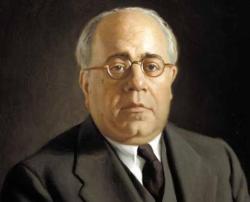
Koçi Xoxe was born into an Albanian-Bulgarian family in northern Greece. He attended high school in Thessaloniki before his family relocated to Albania in 1930. In Korçë, he worked as a plumber and tinsmith. Xoxe embraced communist ideals and co-founded a communist group with Enver Hoxha in 1937. However, political rivalry between the two men emerged early on, leading to Xoxe's arrest and imprisonment in 1938. He managed to escape the following year.
Establishment of the Albanian Party of Labour
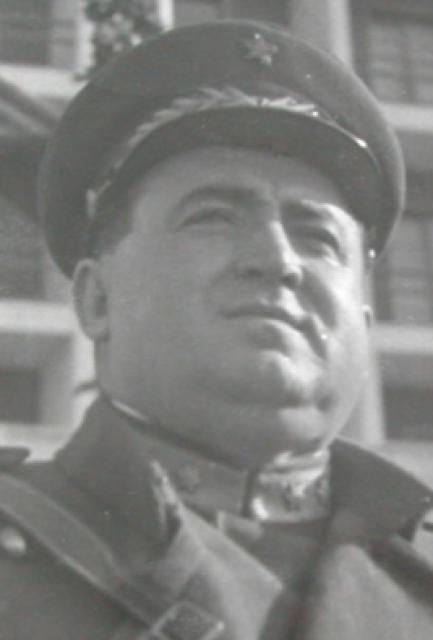
In 1941, Xoxe became a founding member of the Albanian Party of Labour (APL), led by Hoxha. From 1943, he served as a member of the APL's Politburo. During World War II, he held command positions in the National Liberation Army, attaining the rank of general. After the APL came to power, Xoxe became deputy chairman of the Anti-Fascist National Liberation Council (the provisional government of Albania from 1944-1945).
Minister of Internal Affairs and Political Influence
In 1946, Xoxe was appointed Minister of Internal Affairs in the government of the People's Republic of Albania, succeeding Haxhi Lleshi. He headed the secret police, Sigurimi, and oversaw the suppression of Albanian anti-communists. In the early post-war years, Xoxe held significant power and political influence, second only to Hoxha in Albania.
Conflict and Accusations
Xoxe was an ardent supporter of Josip Broz Tito and enjoyed the support of the Yugoslav authorities. He advocated for Albania's integration into a proposed Balkan Federation initiated by Tito, which conflicted with Hoxha's stance.
In the 1948 Soviet-Yugoslav conflict, Hoxha sided with Stalin. A party purge ensued within the APL, with Xoxe becoming the primary target. He was accused of "Titoism," espionage for Yugoslavia, murder, and torture at the behest of Yugoslav secret services, anti-Sovietism, and Trotskyism. The latter accusations were unfounded, and the extent of Xoxe's involvement with Yugoslav intelligence remains unclear. Nevertheless, his orientation towards Tito and close ties with Yugoslav communists were sufficient in the prevailing political climate.
Downfall and Arrest
Xoxe was removed as Minister of Internal Affairs and replaced by Hoxha's close associate, Mehmet Shehu. In November 1948, Xoxe attempted to defend himself at a party congress, presenting a speech that he had coordinated with Soviet Ambassador Dmitry Chuvahin. While vehemently criticizing the Yugoslavs and emphasizing his loyalty to the USSR, Xoxe was nonetheless condemned by the congress and subsequently arrested.
Trial and Execution
Xoxe's interrogation was conducted with extreme violence and psychological torture. In addition to political accusations, he was charged with spying on party leaders and embezzling government funds to the tune of 43,000 lekë. At trial, Xoxe unsuccessfully requested Enver Hoxha as a witness to prove his innocence.
The show trial against Xoxe and his supporters concluded in May 1949. Xoxe was sentenced to death, while his co-defendants received lengthy prison terms. On 11 June, Xoxe was hanged. His successor as Minister of Internal Affairs, Mehmet Shehu, claimed to have personally carried out the execution.
Xoxe's case bears striking similarities to the trials of László Rajk in Hungary, Rudolf Slánský in Czechoslovakia, Władysław Gomułka in Poland, Anna Pauker in Romania, and Traicho Kostov in Bulgaria, reflecting the wave of political purges that swept across Eastern Europe during this period.